
This Post May Contain Affiliate Links. Please Read Our Disclosure Policy.
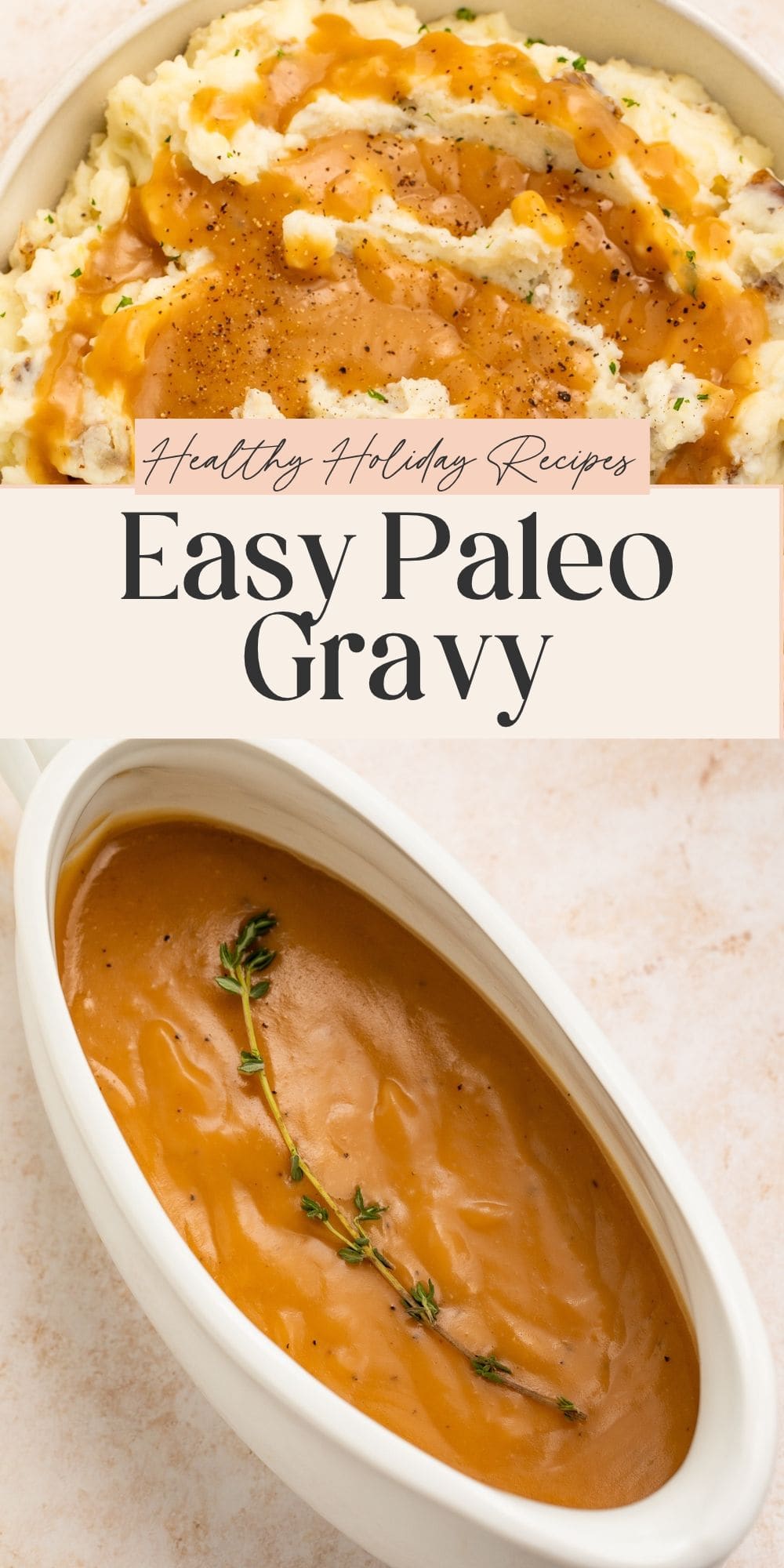

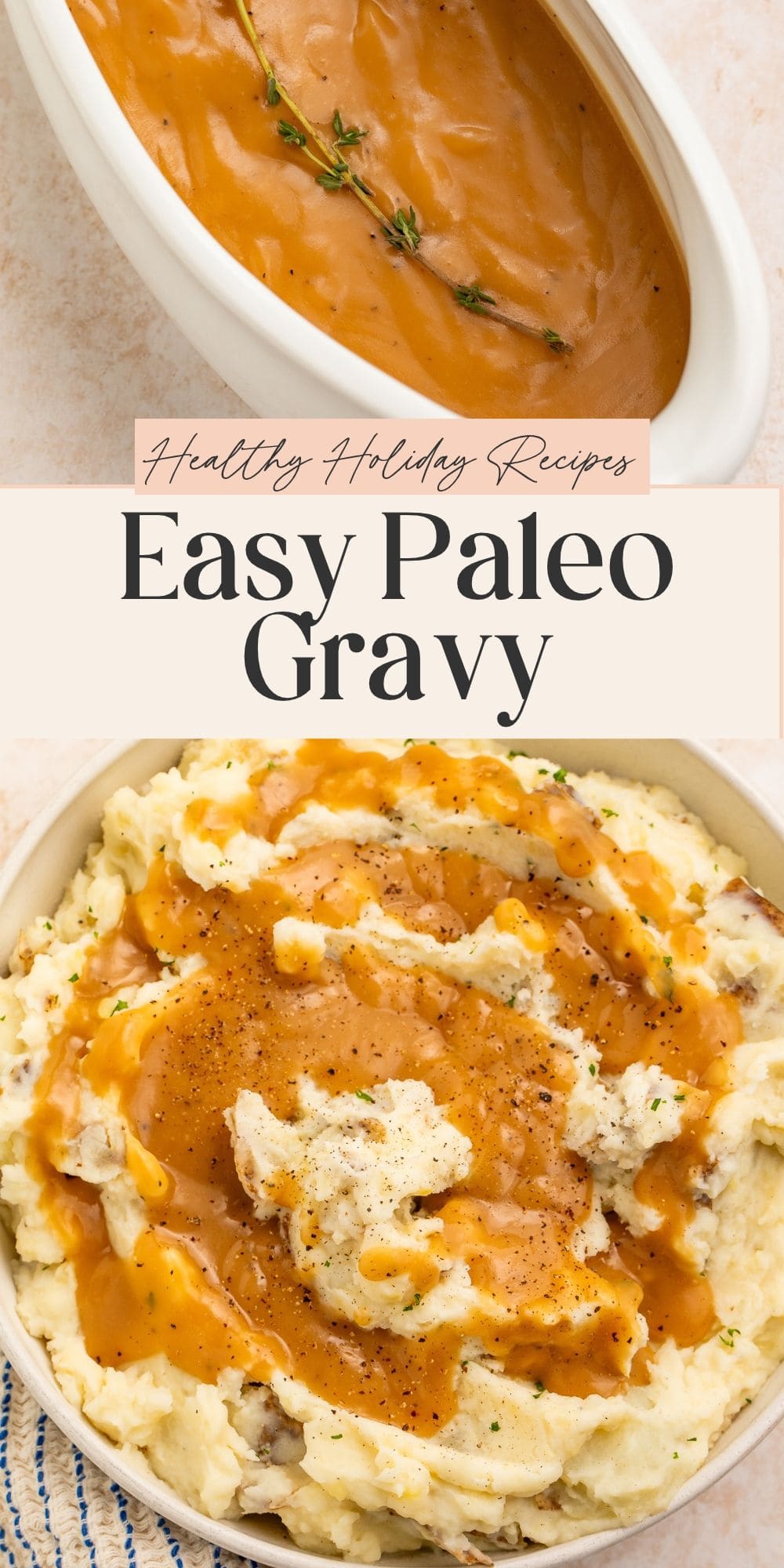
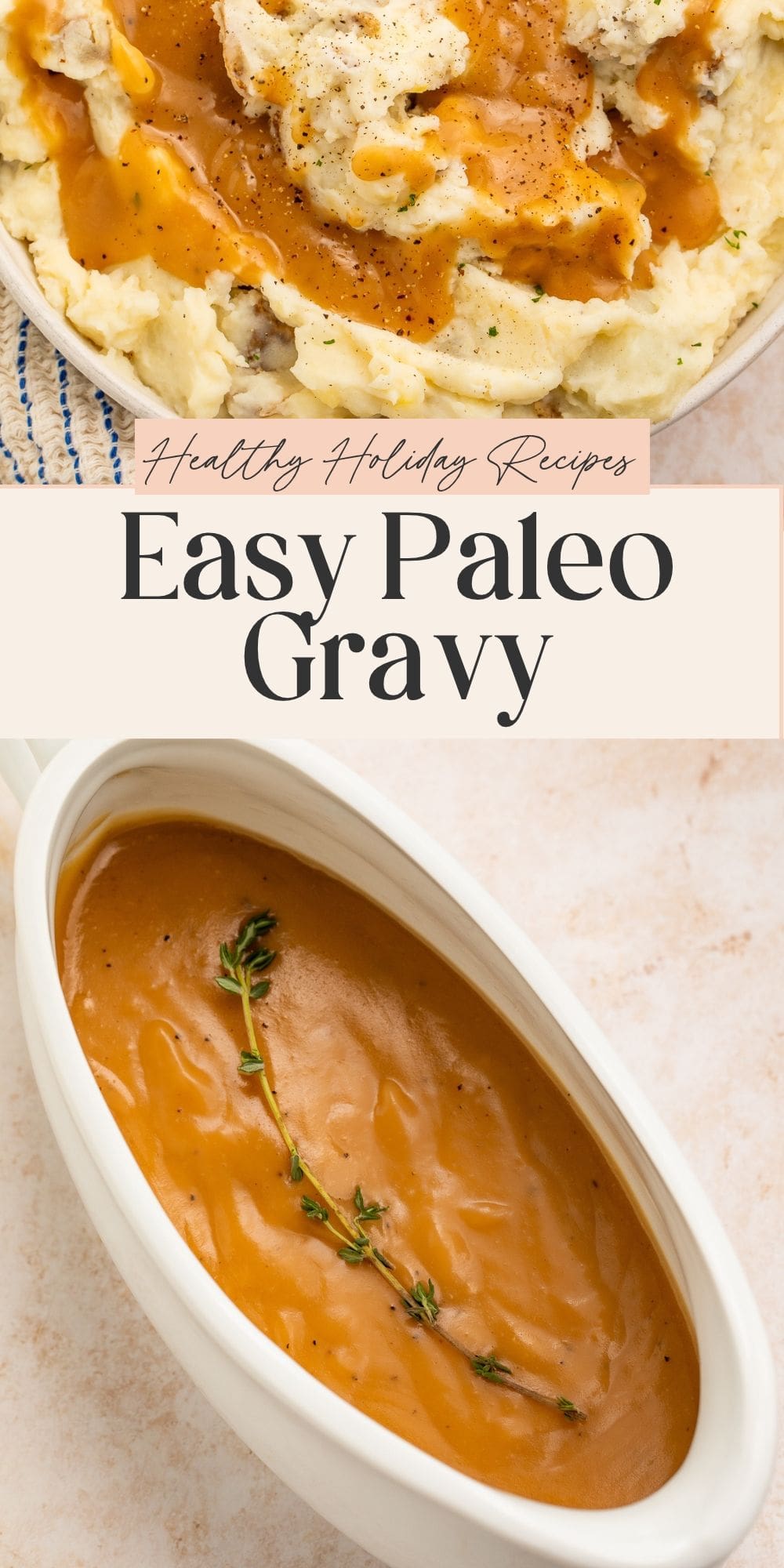
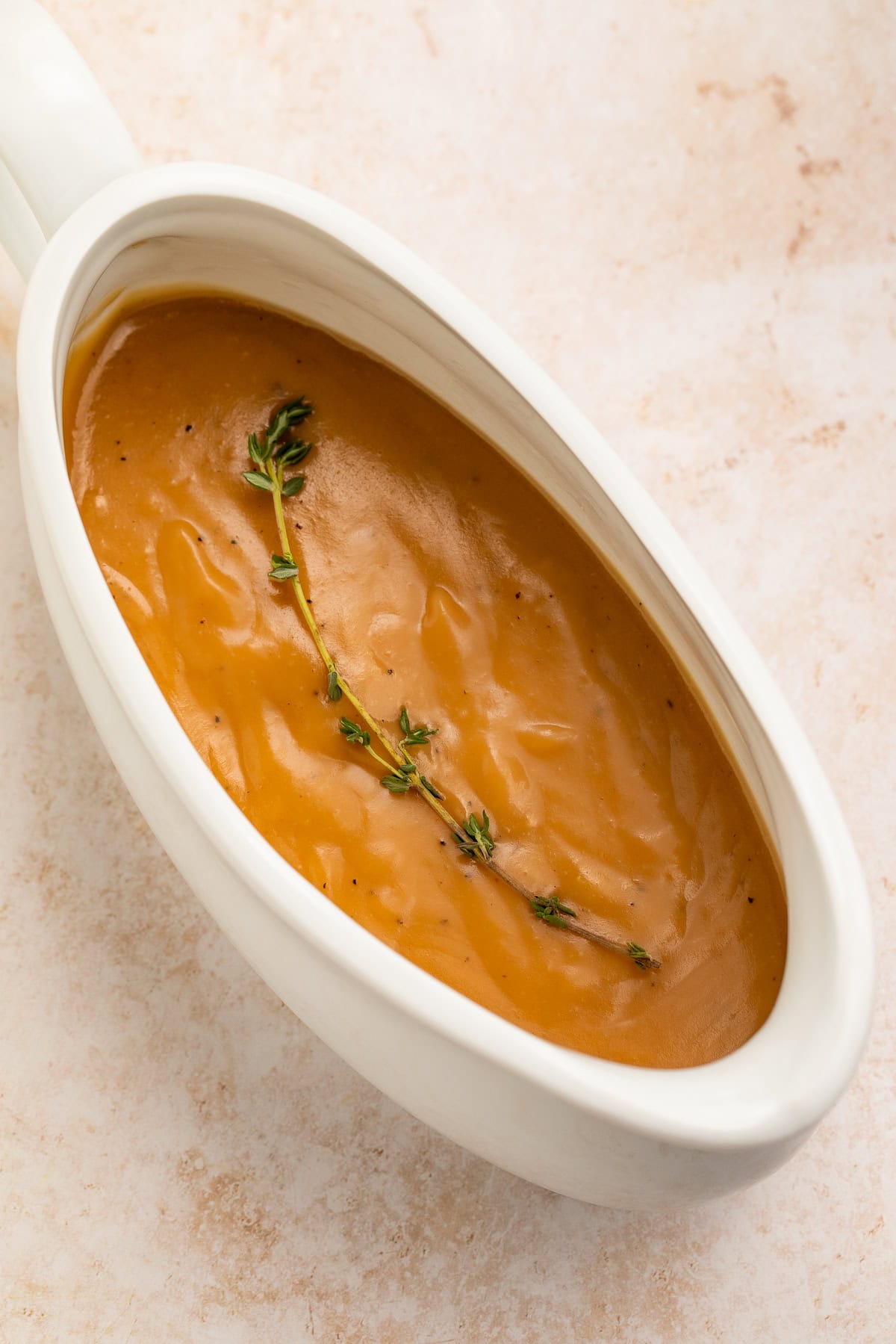
Who says you can’t have a classic holiday dinner when you’re paleo or on a Whole30-round? This easy paleo gravy tastes just like the traditional Thanksgiving gravy you love, but it’s completely grain free, gluten free, and dairy free! You only need 5 ingredients and a few minutes to make the perfect paleo gravy, meaning holiday dinners just got a whole lot better!
See recipe card below for full list of measurements, ingredients, and instructions.
What I Love About This Paleo Gravy Recipe
- It has the flavor and consistency you love and expect in a classic, traditional gravy, but it’s completely free from gluten, grains, and dairy. Tapioca starch (or arrowroot powder if you prefer) makes a fabulous flour-stand-in, making the gravy nice and thick with zero aftertaste or chalky mouthfeel.
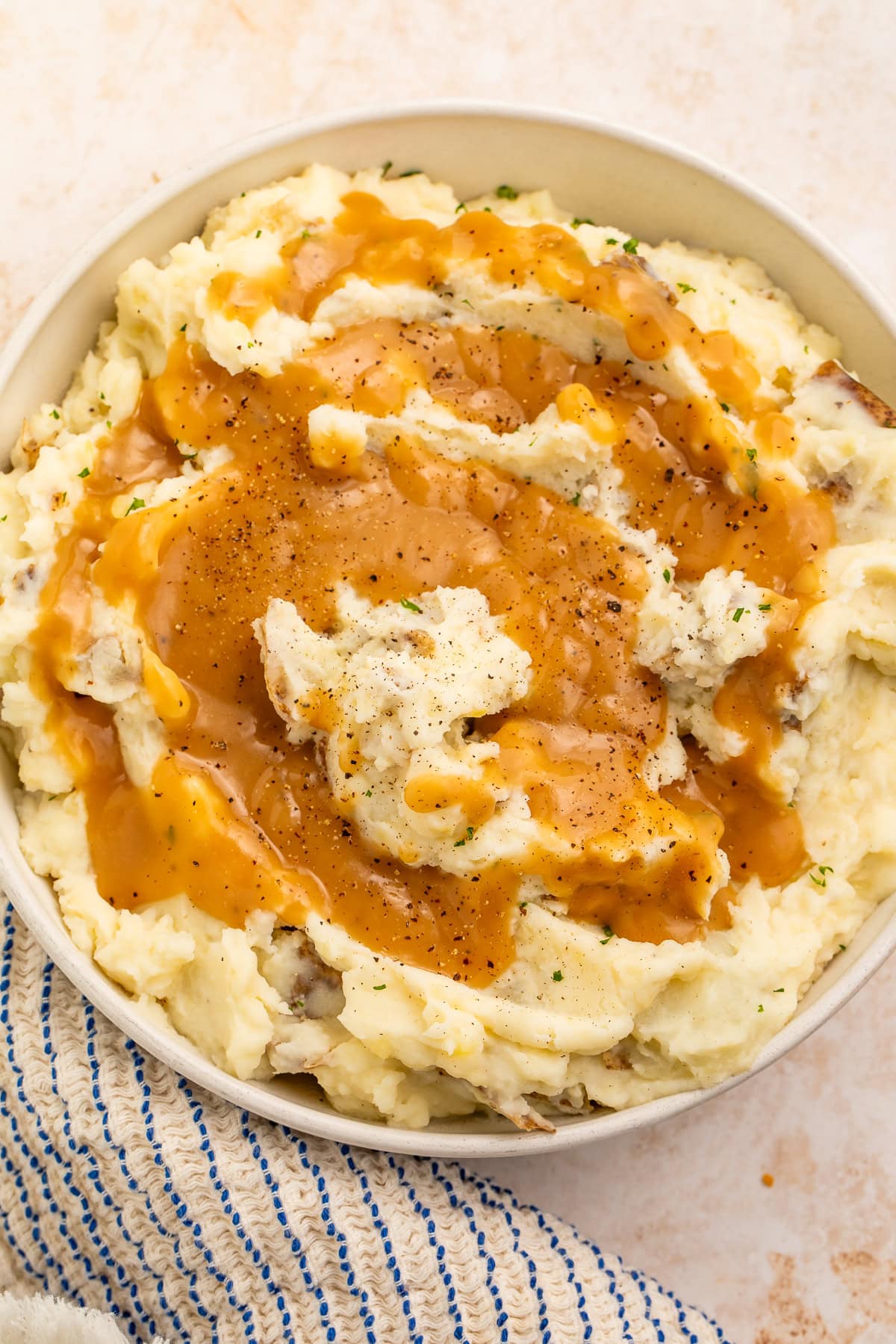
- It’s not just for Thanksgiving or Christmas dinners. You can pair this gravy with any meat, whether it’s roast chicken or turkey or a simple beef pot roast. It’s also delicious over mashed potatoes!
- Paleo gravy doesn’t require any drippings from prepared meat, so if you don’t have enough or you just need something to go with your mashed potatoes, you’re in luck. Of course, you absolutely can use drippings! Ghee, refined coconut oil, and lard are options, too, though. Coconut aminos and a little poultry seasoning will take care of the richness and umami.

What I Learned Testing This Recipe
- When you’re making the (sort of) roux from the drippings and fat and adding the tabioca starch or arrowroot powder, make sure you whisk it really well before adding any liquid. If you don’t break up any powdery clumps at that stage, they’ll stay in the gravy later and they’ll be almost impossible to whisk out at that point.
- Tapioca starch and arrowroot powder can become gummy when they’re heated. If you have trouble incorporating them into your fat of choice, I’ve found an immersion blender also works instead of a whisk.
- Don’t worry if the mixture starts to get a little grainy or lumpy as you add the stock. Just keep whisking and it will come smooth again before you simmer it to thicken it up.
- During most tests of this gravy, I did not need to add any extra salt so I recommend using low-sodium stock and then adding your own salt at the end if you need find you need it. If you use a full-sodium stock and the gravy tastes too salty, there’s not really an easy way to fix it.
Ingredients
Fat of choice – Ghee, refined coconut oil, or the drippings from the cooked turkey will all make a great base for the gravy in place of butter. Drippings will obviously provide the best flavor, but if you don’t have enough of them just make up the amount with one of the other options.
Tabioca starch – Or arrowroot powder, in place of the usual flour or cornstarch.
Low-sodium chicken stock – Or turkey stock! I prefer to use low-sodium stock making gravy and sauces so I can make sure they don’t accidentally become too salty. You can also boost the nutrients in the gravy by swapping out the chicken stock for a rich, nutrient-dense bone broth. It has a deeper flavor than chicken broth, plus it’s loaded with collagen, nutrients, and extra protein.
Poultry seasoning – To boost the gravy. I’ve also had good results substituting a homemade blend of ground marjoram, sage, rosemary, thyme, nutmeg, and pepper.
Coconut aminos – Optional, but I find they add a lovely flavor boost if the gravy is feeling a bit flat. It also makes the color of the gravy closer to what you’d expect.
Make-ahead & Storage Suggestions
To get ahead, make the gravy and let it cool completely, then refrigerate in an airtight container for up to 3 days. Reheat it on stovetop over medium-low heat, stirring constantly until gravy is heated-through.
Leftover gravy will keep for up to 3 days from fresh, so keep this in mind when you’re reheating gravy you have already made a few days before the big meal. I’d not recommend freezing leftovers made with arrowroot as they can turn slimy and loose their thickened quality when frozen and thawed, but the tapioca version will last for up to 2-3 months in a sealed container.
Frequently Asked Questions
Yes! Use vegetable stock instead of chicken stock, and choose refined coconut oil instead of ghee or drippings. It’s also worth mentioning that no chickens are harmed in the making of poultry seasoning. Despite the name, it’s really just a blend of herbs and spices, making it vegan and gluten-free.
Yes, but if you’re making less than the full amount I’d use a smaller saucepan as it will make whisking the ‘roux’ a lot easier.
It’s lower in carbs than traditional flour-based gravy, but tapioca is still a starch. This recipe works out roughly 4g carbs per serving, which may fit some low-carb plans but isn’t strictly keto.
Making changes to a recipe can result in recipe failure. Any substitutions or variations listed are simple changes that I believe will work in this recipe, but results are not guaranteed.
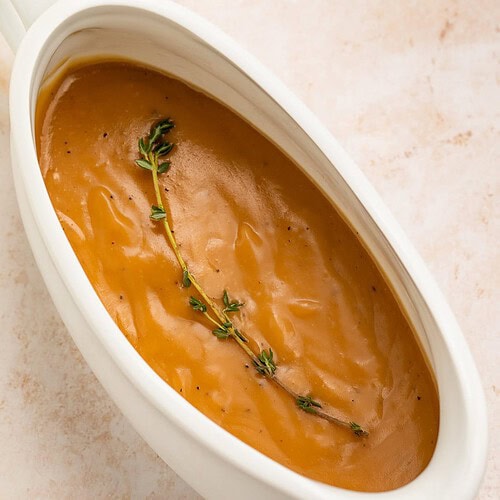
Easy Paleo Gravy (Whole30, Gluten Free)

Equipment
- medium saucepan
- stovetop
- whisk
Ingredients
- 3 tablespoons fat of choice ghee, refined coconut oil, or drippings from cooked meat
- 4 tablespoons tapioca starch or arrowroot powder
- 2 ½ cups low-sodium chicken stock hot, but not boiling; or vegetable stock
- ¼-½ teaspoon poultry seasoning
- ½-1 tablespoon coconut aminos optional
- salt optional, to taste
- freshly cracked black pepper optional, to taste

Instructions
- Place medium saucepan on stovetop over medium-low heat. When pan is warm, add 3 tablespoons fat of choice. If solid, let fat melt completely.
- When fat is heated through, sprinkle 4 tablespoons tapioca starch into saucepan. Vigorously whisk starch into fat until ingredients are fully combined and mixture is smooth.
- Simmer mixture over medium-low heat 1 minute, whisking constantly, until mixture is golden and bubbling.
- Once bubbling, gradually pour in 2 ½ cups low-sodium chicken stock (hot, but not boiling) in small increments, whisking constantly. Mixture will become slightly grainy and may begin to clump. Continue whisking until all chicken stock has been added and mixture is very smooth.
- Simmer gravy, whisking regularly, 2 to 4 minutes or until gravy has thickened. Add ¼-½ teaspoon poultry seasoning and ½-1 tablespoon coconut aminos (optional). Whisk until incorporated.
- Taste gravy and, if necessary, add salt and freshly cracked black pepper to taste.
- When satisfied with flavor of gravy, transfer gravy to serving container. Serve warm.
Video
Approximate Information for One Serving
Nutrition Disclaimers
Number of total servings shown is approximate. Actual number of servings will depend on your preferred portion sizes.
Nutritional values shown are general guidelines and reflect information for 1 serving using the ingredients listed, not including any optional ingredients. Actual macros may vary slightly depending on specific brands and types of ingredients used.
To determine the weight of one serving, prepare the recipe as instructed. Weigh the finished recipe, then divide the weight of the finished recipe (not including the weight of the container the food is in) by the desired number of servings. Result will be the weight of one serving.
Did You Make This Recipe?
Tag @40aprons on Instagram and be sure to leave a review on the blog post!
More Paleo Holiday Recipes You’ll Love
Never Miss A Meal!
New Recipes Straight To Your Inbox
A curated selection of our most recent recipes, delivered straight to your inbox once a week.













I didn’t make this recipe, but all the complaints about the gelatinous texture… flour is the only thing that will produce what you seem to be wanting, corn starch is kind of similar but still gelatinous and it comes from the endosperm of corn so it’s still a grain… if you’re avoiding grain then tapioca starch and gelatin are your best alternatives but they’ll be y’know gelatinous. you could try cassava flour but whole cassava/yuca root contains quite a bit of lead thanks to our genius use of leaded gasoline that vaporized it into the atmosphere and completely wrecked the soil globally. you all can’t have your cake and eat it too. honestly i would recommend using gelatin as the best alternative to grain if for no other reason than it’s not nutritionally defunct like all starches inherently are. (they’re pure carbs/sugar). really though if you absolutely hate the texture then i recommend just seasoning to taste and consuming it like a soup, it will taste amazing and of course any fats will not emulsify without using lecithin, an immersion blender (this is temporary), or potentially using potatoes to create a structure for everything to hold together.
seriously though, you all will complain about anything and everything without ever giving it much thought as to why. this goes beyond cooking, this is how all of you live your entire lives and then act surprised that society operates as ineffectively and inefficiently as it does. good luck on the path(s).