
This Post May Contain Affiliate Links. Please Read Our Disclosure Policy.
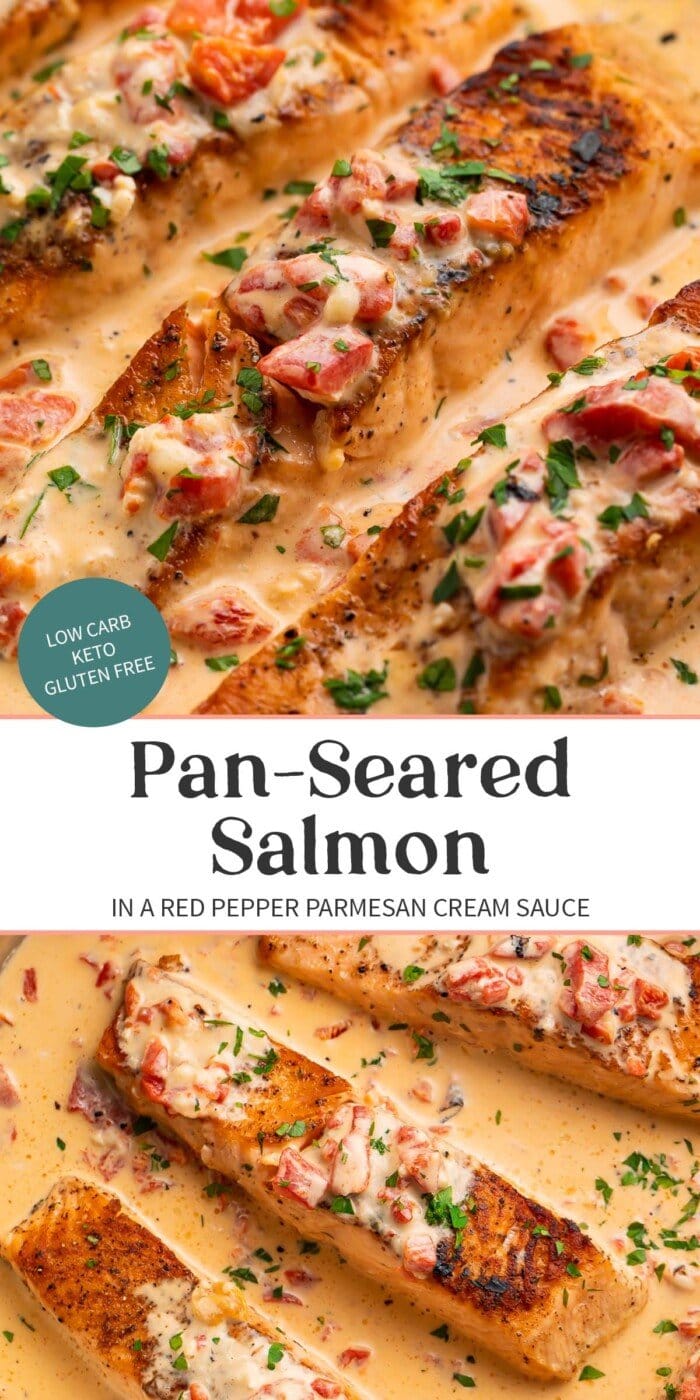
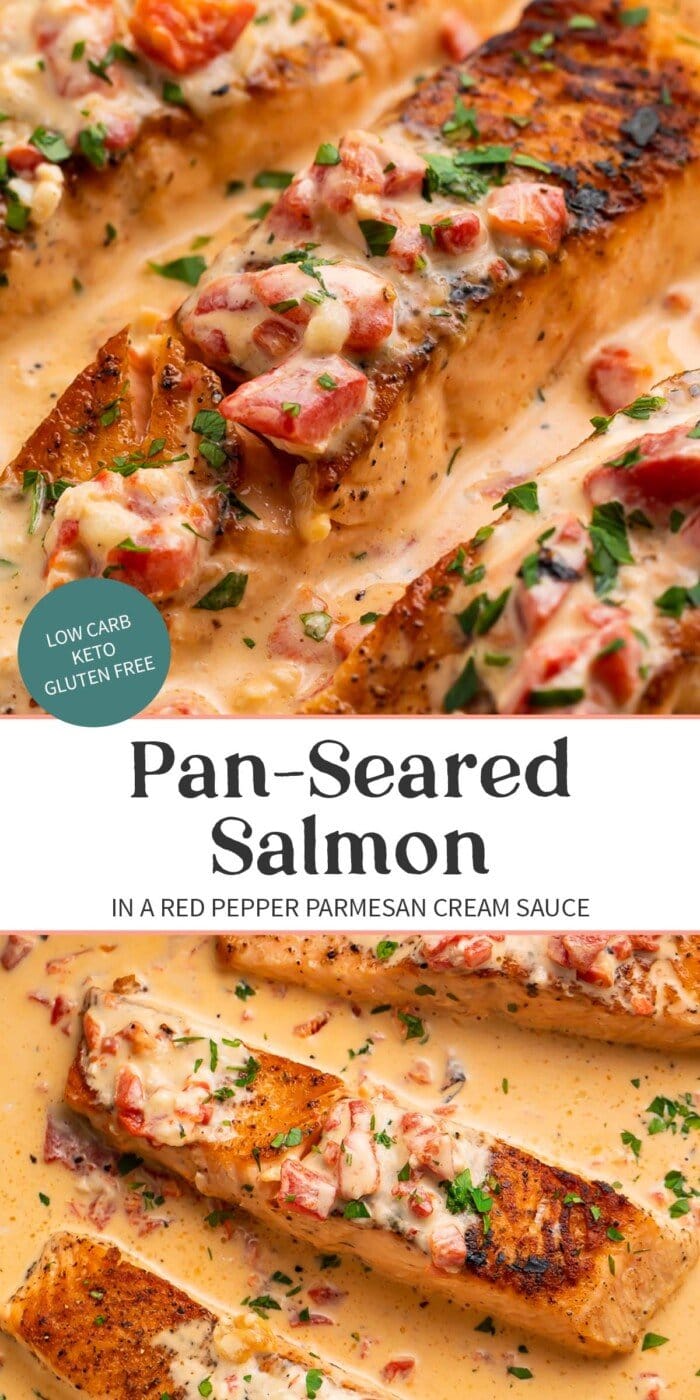
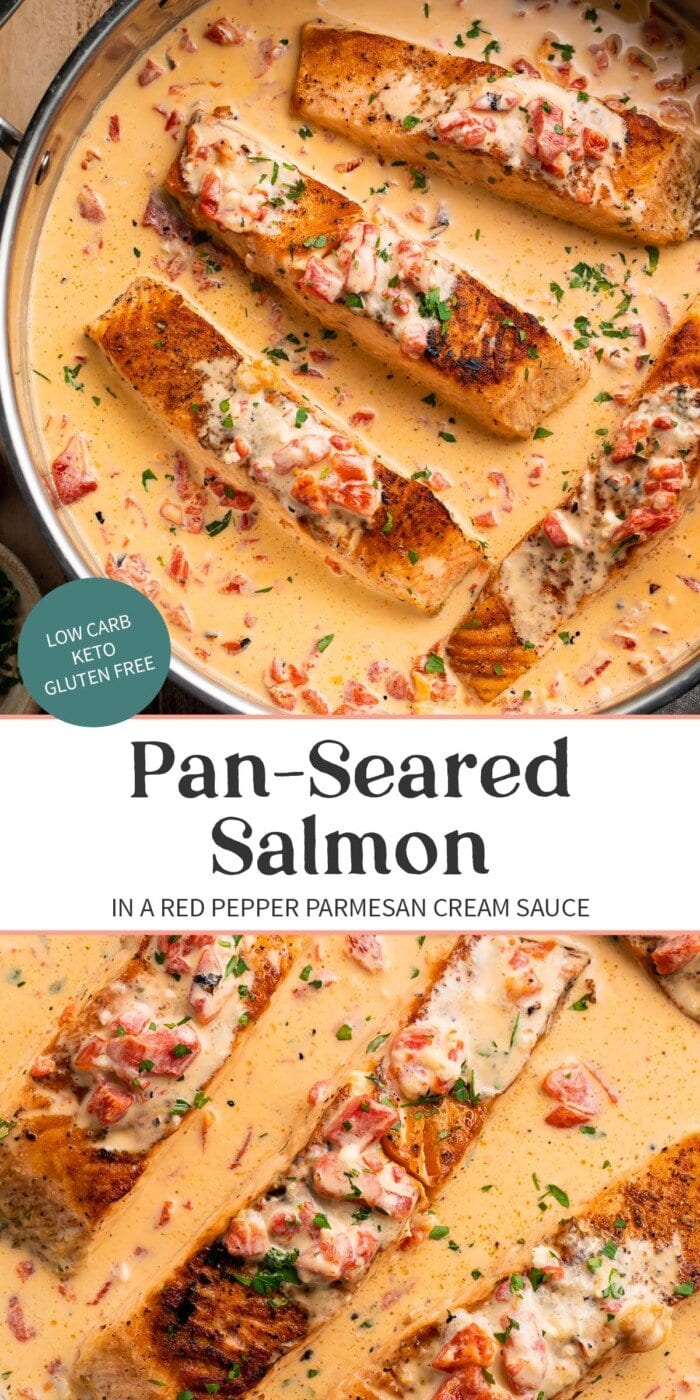
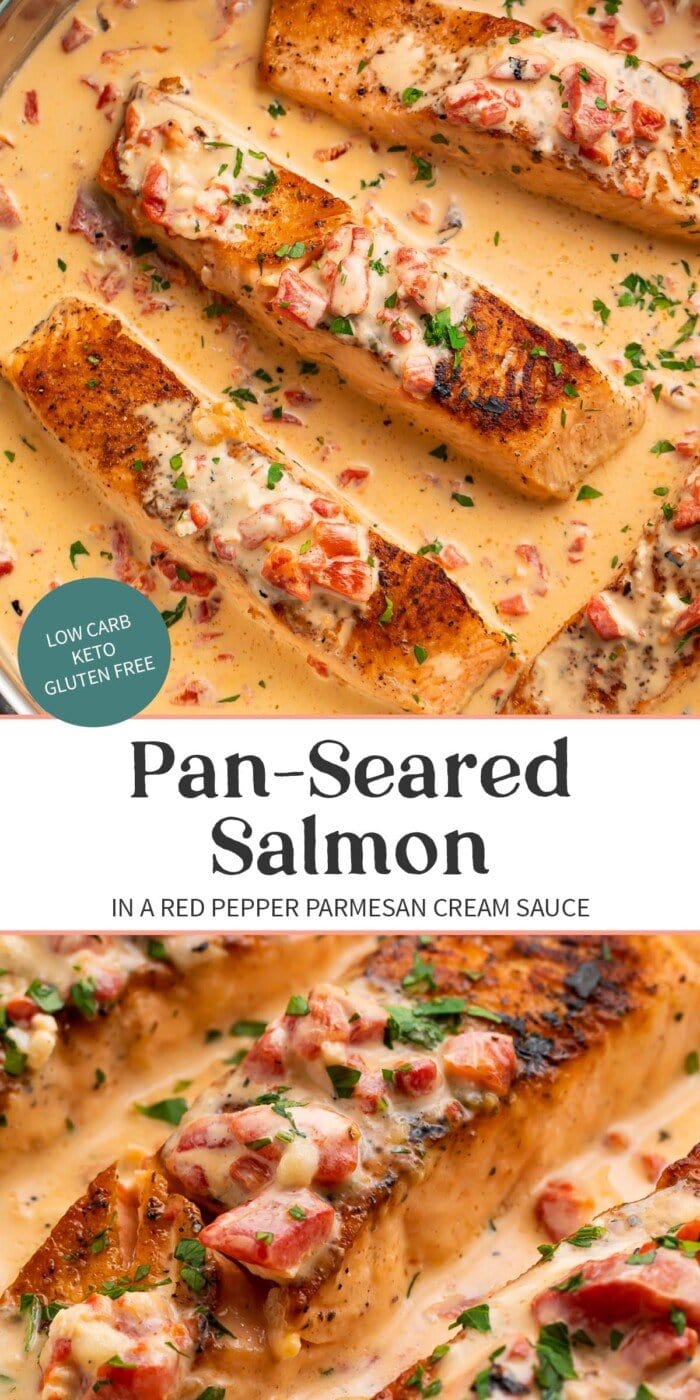
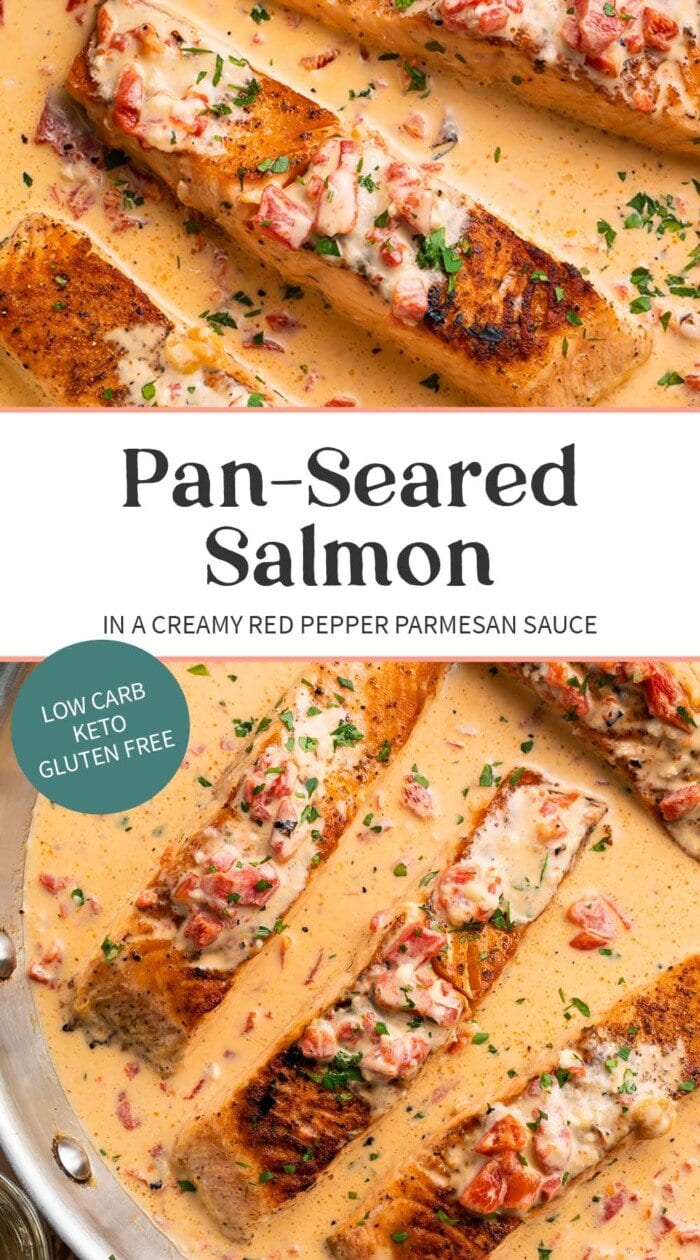
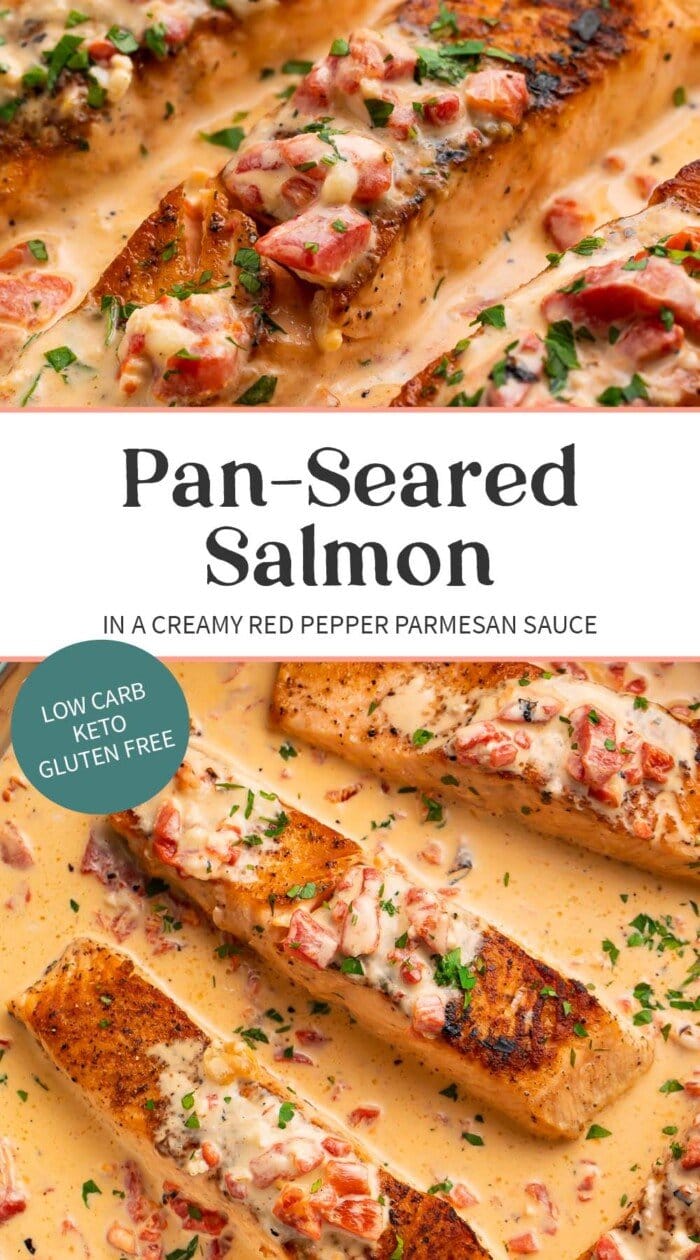
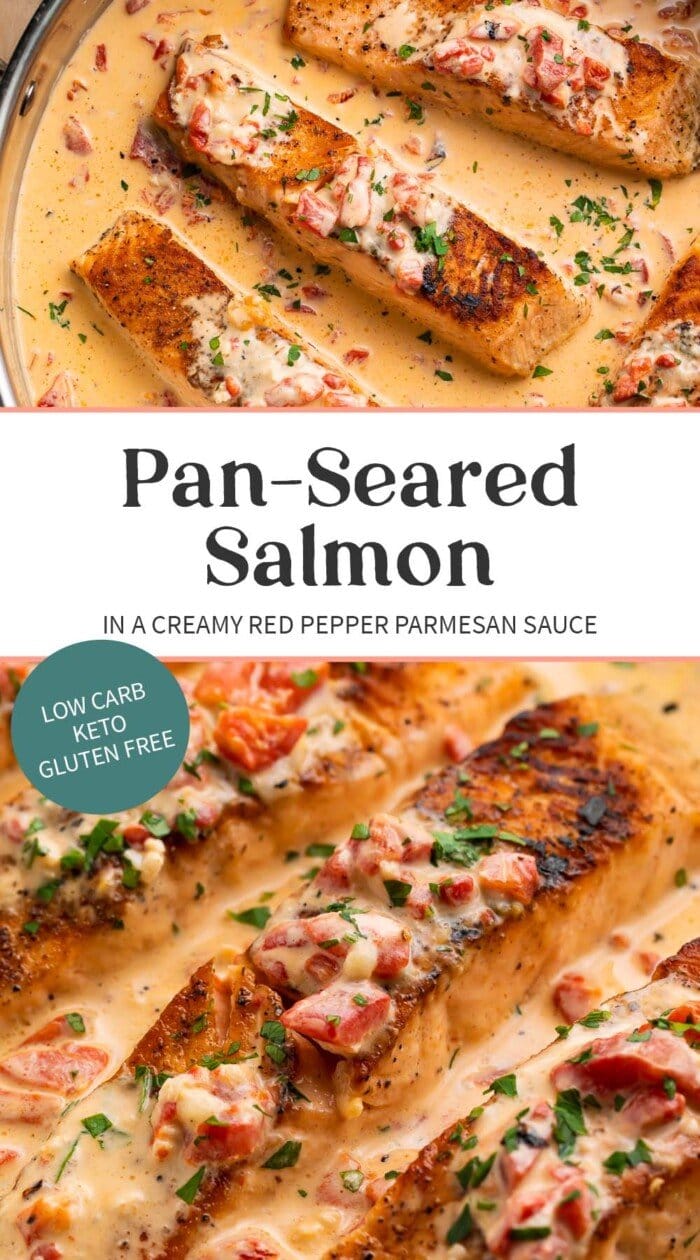
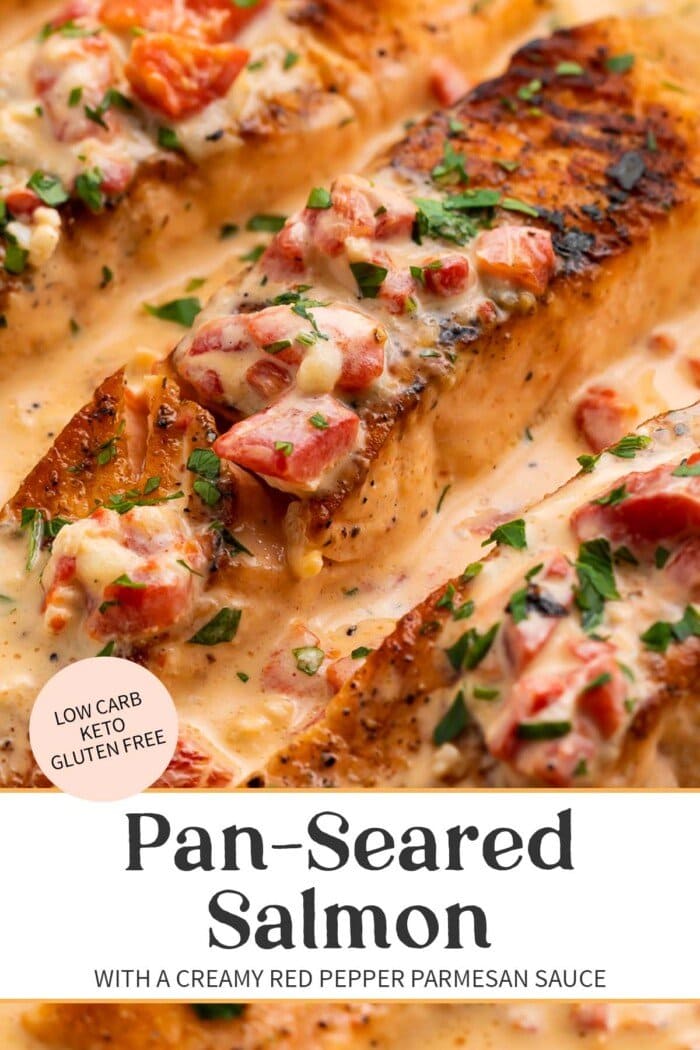
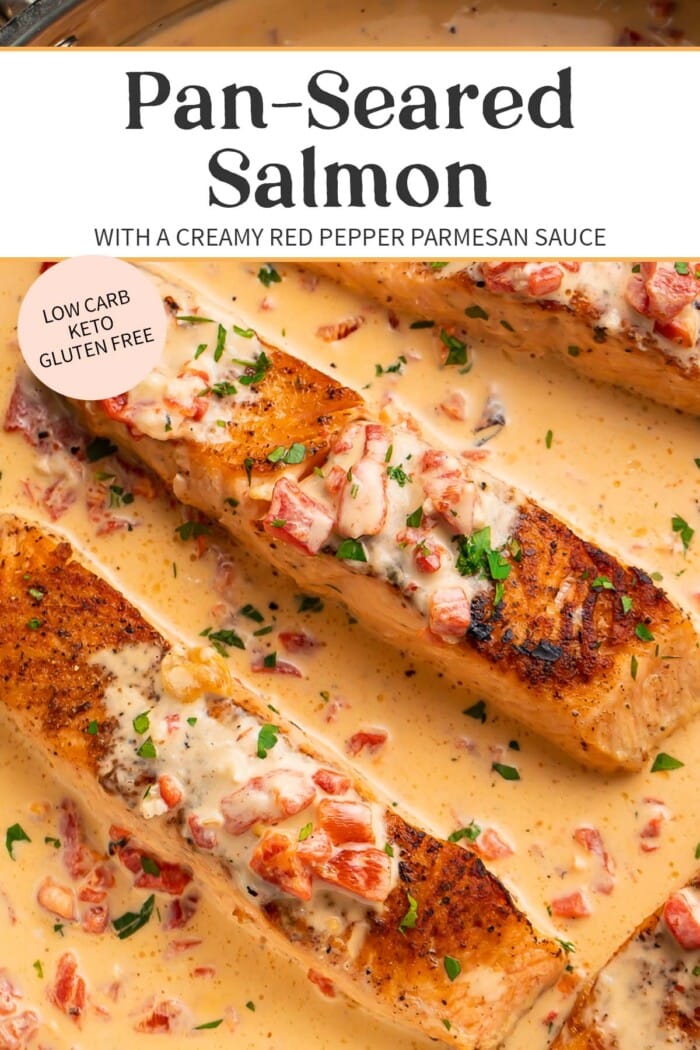
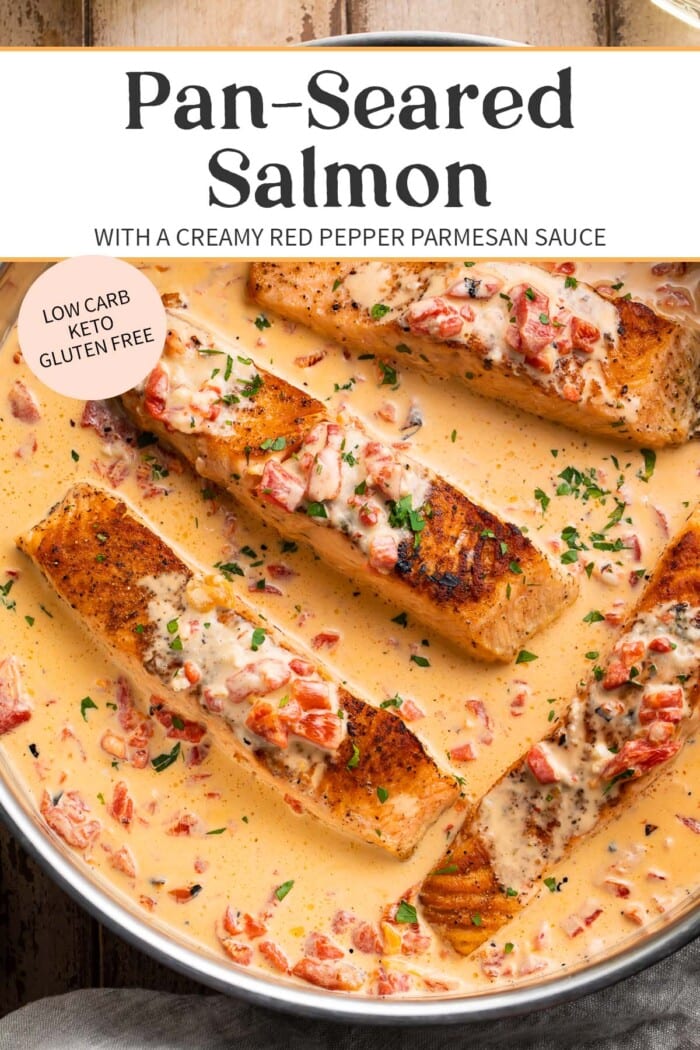
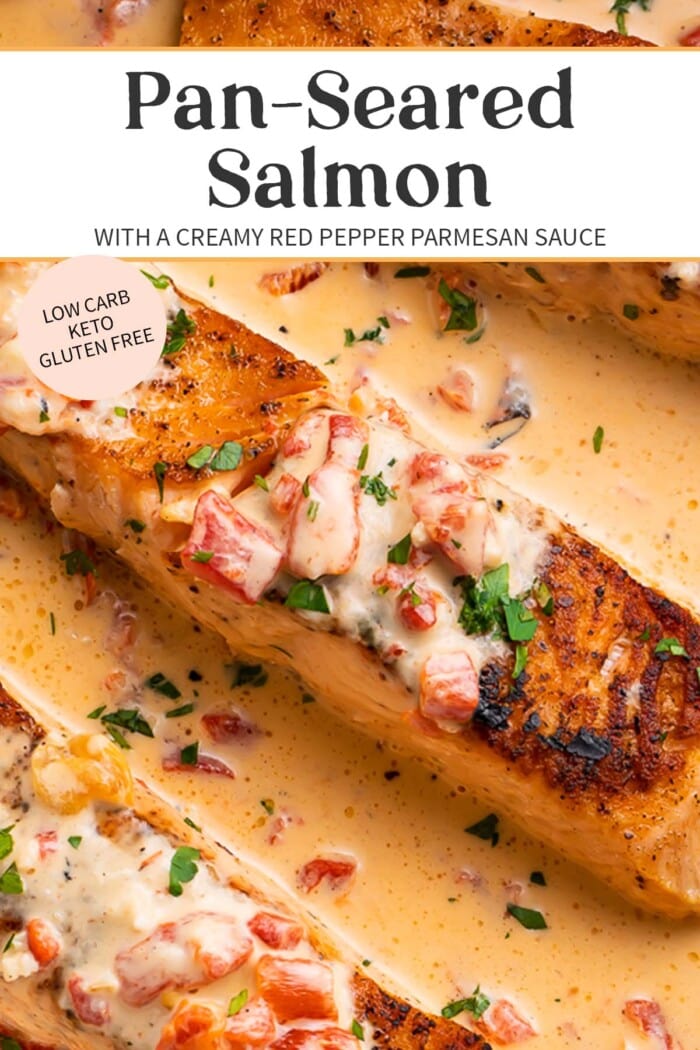
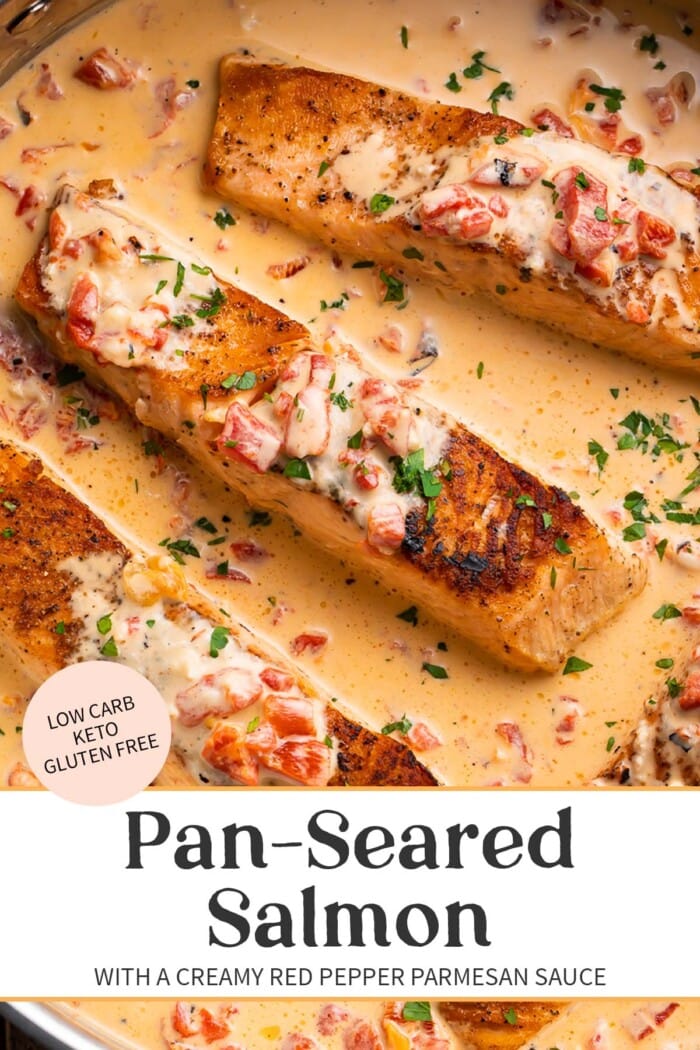
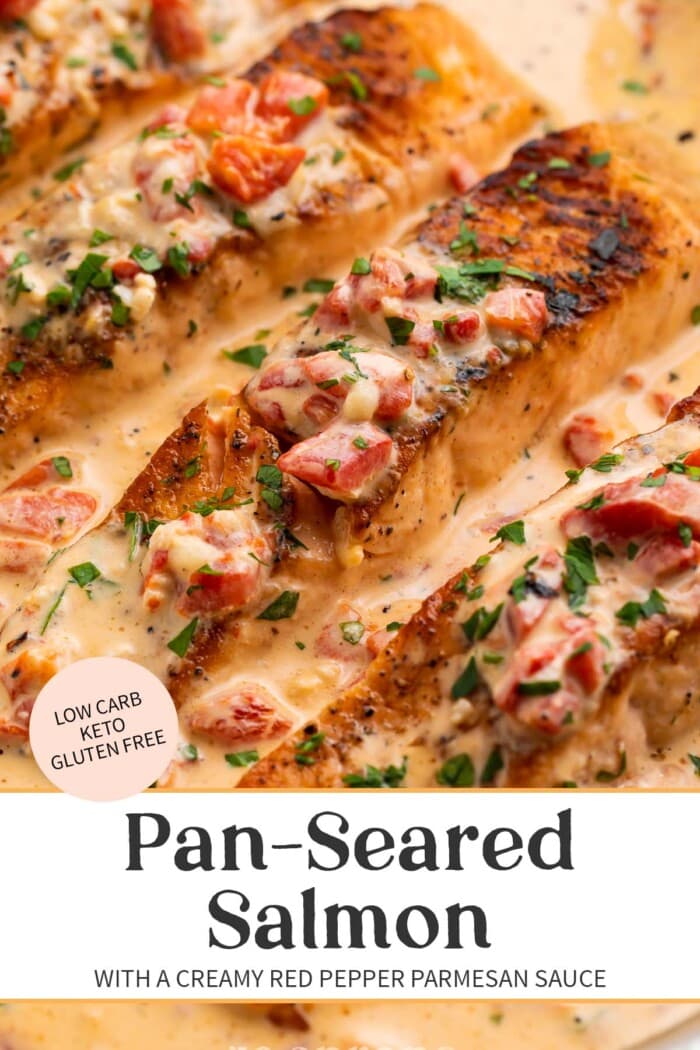

This perfectly tender, pan seared salmon recipe is smothered in a decadent, rich, and creamy parmesan roasted red pepper sauce. I make this for my family often, and it’s one of our favorites. It’s easy enough to make on a weeknight but delicious enough for company, and that sauce is absolutely to die for!
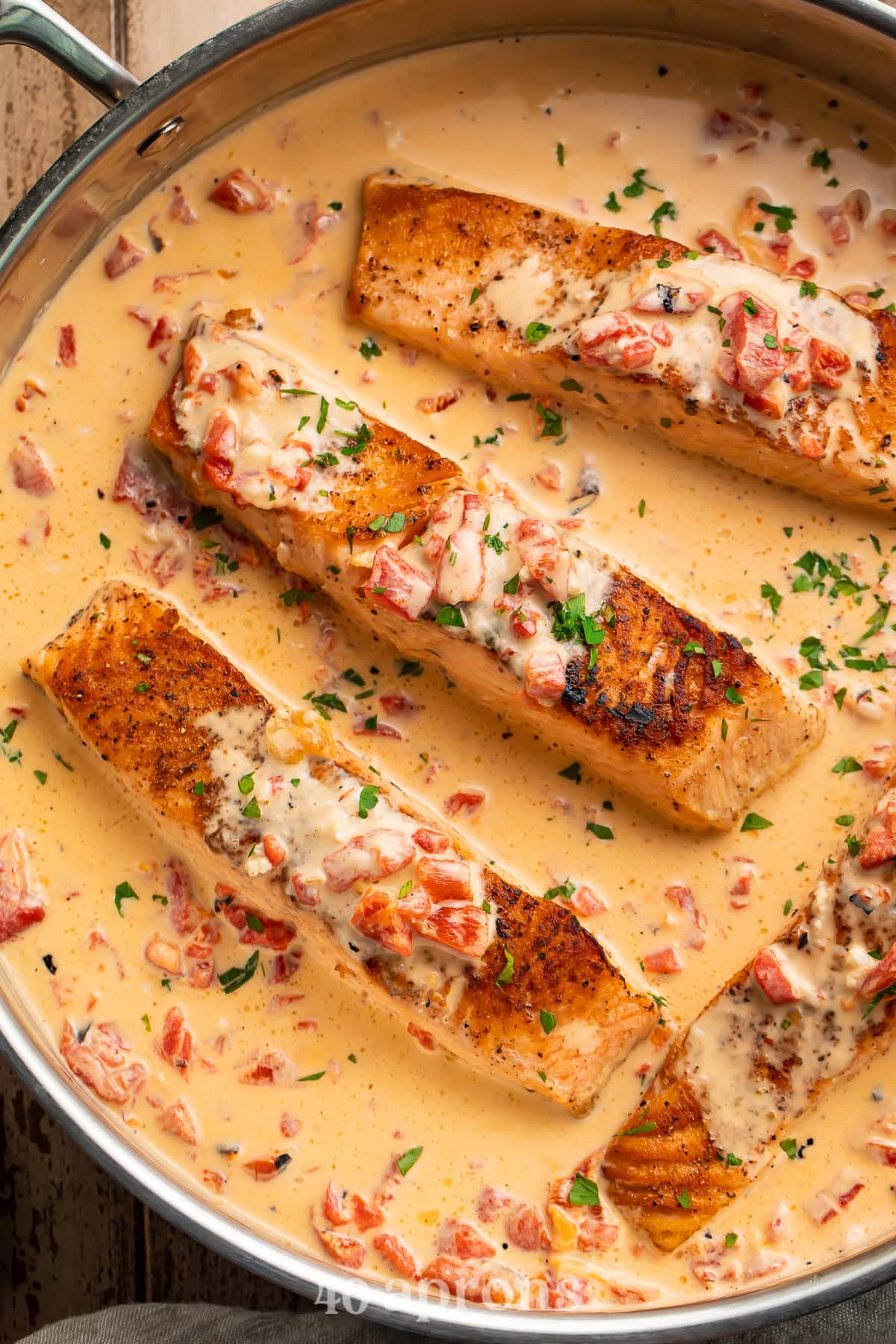
See recipe card below for full list of measurements, ingredients, and instructions.
Why This is So Good
- It’s no secret we’re big fans of one-pan meals around here. Can you blame us? They’re typically super easy, plus the fewer dishes you have to use (and clean), the better. All of the cooking in this salmon recipe takes place in the same skillet, so get excited!
- The flavors in this recipe are SO GOOD. Vaguely reminiscent of our marry me chicken with the rich alfredo-esque parmesan cream sauce, but it’s got just a little more kick thanks to the roasted red peppers. This might be my new favorite pan sear salmon recipe ever, and it’s a great option for picky eaters.
- This is one of those entrees that tastes amazing with basically any side. Keep things keto/low carb with cauliflower rice or palmini pasta. If that’s not your thing, serve it over rice, mashed potatoes, couscous, or traditional pasta. If you want to go green, try it with air fryer broccoli, sautéed green beans, or a little shaved brussels sprouts salad.
What You Need to Know Before You Start
- Use an instant-read thermometer inserted into the thickest part of the salmon fillet. You want 120°F for medium-rare (slightly translucent center), 130°F for medium (my personal sweet spot), or 145°F for well-done. The salmon will continue cooking after you remove it from heat, so pull it about 5 degrees before your target temperature. Overcooked salmon is dry and disappointing, but perfectly cooked salmon is buttery and incredible!
- Pat those fillets completely dry before seasoning. Excess moisture prevents that gorgeous golden crust from forming. Use paper towels to thoroughly dry both sides, then season generously. Don’t move the salmon around in the pan while it’s searing—let it sit undisturbed so the crust can develop properly.
- Cold dairy hitting the hot pan can cause the sauce to break or curdle, giving you a grainy texture instead of silky smooth perfection. Set your cream and parmesan out on the counter while you prep everything else—easy fix that makes a huge difference.
- Minced garlic needs only 30 to 60 seconds in the pan to become fragrant and delicious. Any longer than that and you’ll end up with bitter, burnt garlic that completely throws off the flavor balance of your sauce. Keep a close eye and keep it moving in the pan.
Recipe Variations
Make it Spicy. Add ½ teaspoon red pepper flakes or a diced jalapeño to the sauce along with the garlic. For a smoky kick, try ¼ teaspoon smoked paprika in the seasoning blend and a pinch of cayenne in the sauce.
Swap the Protein. This sauce works beautifully with other proteins! Try it with chicken breasts (pounded thin for even cooking), pork chops, or firm white fish like halibut or cod. Cooking times will vary based on thickness, so use a meat thermometer to check for doneness.
Add Greens. Stir in 2 cups of fresh spinach or chopped kale during the last minute of cooking the sauce. The greens will wilt into the sauce and add nutrition, plus a pop of color. Cherry tomatoes also make a great addition—halve about 1 cup and add them with the roasted red peppers.
Change the Peppers. Use jarred piquillo peppers for a sweeter, milder sauce, or try fire-roasted poblanos for a smokier flavor. Sun-dried tomatoes (about ½ cup, chopped) create a tangier, more intense version that’s equally amazing.
Make it Lemony. Double the lemon juice (2 tablespoons total) and add 1 teaspoon of lemon zest to the sauce for a brighter, more citrus-forward flavor that cuts through the richness beautifully.


Frequently Asked Questions
Yes, but make sure to thaw it completely first! Put the frozen fillets in the fridge overnight, or use the quick-thaw method by sealing them in a plastic bag and submerging in cold water for about 30 minutes. Pat them extra dry before seasoning since thawed fish tends to release more moisture.
Jarred roasted red peppers work great and save time, but you can also roast your own bell peppers (red, orange, or yellow all work). Sun-dried tomatoes packed in oil make an interesting twist with a deeper, tangier flavor. For a milder version, try roasted poblano peppers.
For sure, you can make the sauce up to 2 days ahead and store it in an airtight container in the fridge. When you’re ready to serve, reheat it gently over medium-low heat, stirring frequently. You may need to whisk in a tablespoon or two of cream or chicken broth to restore the silky consistency.
If you want to remove the skin before cooking, use a sharp knife and slide it between the skin and flesh at a shallow angle. But honestly, the pan seared salmon with skin gets wonderfully crispy when you sear it, and it easily peels right off the cooked fillet with a fork. Way less hassle that way!
Pat your salmon fillets completely dry with paper towels, season generously, then place them skin-side down in a hot skillet with shimmering oil. Let them cook undisturbed for 4 minutes until the skin is crispy and golden—don’t move them around or you won’t get that gorgeous crust. Flip once and cook for another 2 to 4 minutes, using an instant-read thermometer to check for your preferred doneness (120°F for medium-rare, 130°F for medium, 145°F for well-done).
Yes! This sauce works beautifully with other firm fish like halibut, cod, or sea bass. Just adjust the cooking time based on the thickness of your fillets—thicker cuts need a bit more time, while thinner pieces cook faster.

More Yummy Salmon Recipes
- Baked Stuffed Salmon
- Hot Honey Salmon Bites
- Marry Me Salmon
- Lemon Pepper Salmon
- Smoked Salmon Carpaccio (2 Ways)
- Salmon and Veggies Sheet Pan Meal with Hot Honey and Yogurt Sauce
- Hot Honey Salmon
- Salmon Wellington
- Jerk Salmon with Mango Salsa
- Canned Salmon Salad
- Sous Vide Salmon
- Teriyaki Sesame Salmon Hibachi with Fried Rice and Vegetables
Making changes to a recipe can result in recipe failure. Any substitutions or variations listed are simple changes that I believe will work in this recipe, but results are not guaranteed.

Pan-Seared Salmon with a Red Pepper Sauce

Equipment
- Large skillet
- Plate
- Medium bowl
Ingredients
- 4 salmon fillets approximately 6 ounces each
- 1 tablespoon avocado oil
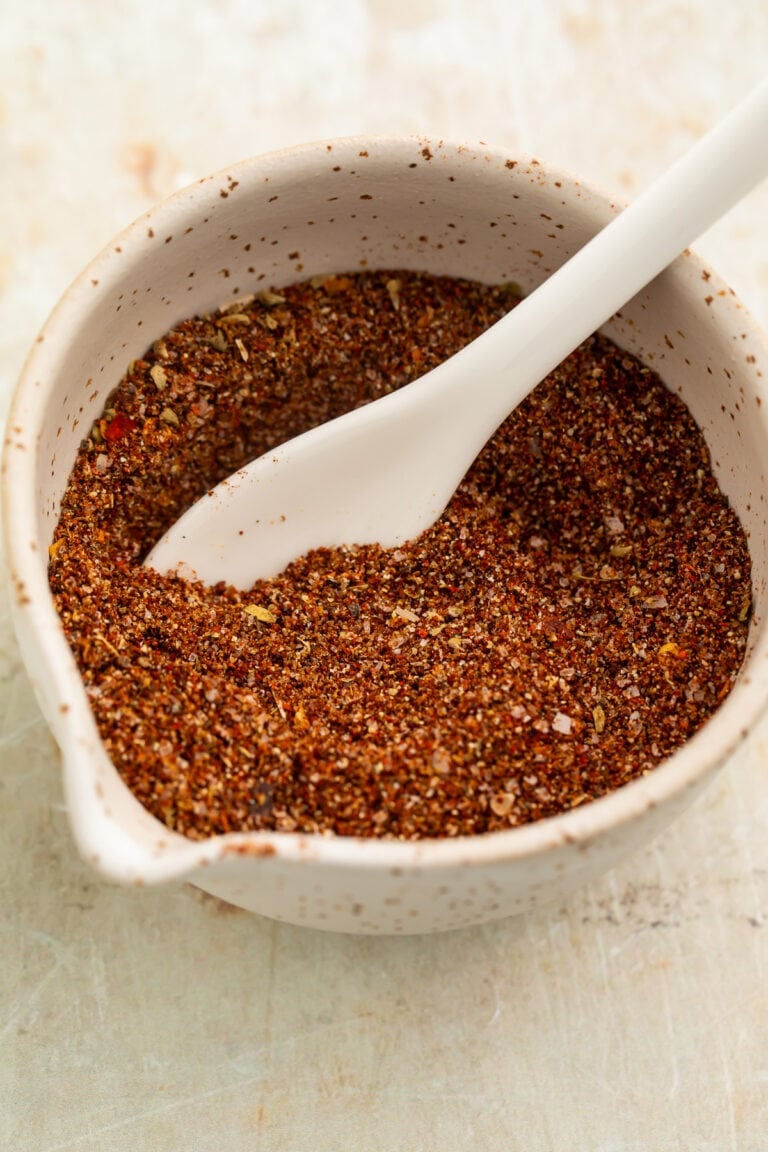
- seasoning salt or Redfish Magic seasoning, see Notes
- 1 cup chicken broth
- 1 tablespoon butter
- 1 tablespoon fresh lemon juice
- 3 cloves garlic minced
- 1 cup roasted red peppers chopped
- 1 cup heavy cream at or close to room temperature
- ⅓ cup freshly grated parmesan at room temperature
Optional Garnishes
- additional freshly grated parmesan
- chopped fresh parsley or chives

Instructions
- Liberally season both sides of each salmon fillet with seasoning blend (see Notes).
- Add avocado oil to large skillet and warm over medium-high heat. Once oil is hot, place salmon fillets in skillet with skin-side down. Sear 4 minutes or until skin is golden and crisp.
- Flip fillets and cook skin-side up for 2 to 4 minutes or until desired doneness is reached. Transfer fillets to plate and return skillet to stove.
- Reduce heat to medium-low and pour 1 cup chicken broth into skillet. Deglaze pan, scraping up any browned bits that may be stuck to bottom. Simmer until liquid is reduced by 50%, then pour remaining liquid into medium bowl.
- Return skillet to stove and increase heat to medium. Melt butter in skillet, then add minced garlic and sauté 30 to 60 seconds or until just fragrant.
- Add in chopped roasted red peppers, fresh lemon juice, and heavy cream. Return reduced chicken broth to skillet and stir well. Bring liquid to boil and reduce until slightly thickened, approximately 3 minutes.
- Remove skillet from heat and stir in freshly grated parmesan until cheese is fully incorporated. Return salmon fillets to skillet and spoon plenty of sauce over tops, then serve immediately with desired sides.
Approximate Information for One Serving
Nutrition Disclaimers
Number of total servings shown is approximate. Actual number of servings will depend on your preferred portion sizes.
Nutritional values shown are general guidelines and reflect information for 1 serving using the ingredients listed, not including any optional ingredients. Actual macros may vary slightly depending on specific brands and types of ingredients used.
To determine the weight of one serving, prepare the recipe as instructed. Weigh the finished recipe, then divide the weight of the finished recipe (not including the weight of the container the food is in) by the desired number of servings. Result will be the weight of one serving.
Did You Make This Recipe?
Tag @40aprons on Instagram and be sure to leave a review on the blog post!
Never Miss A Meal!
New Recipes Straight To Your Inbox
A curated selection of our most recent recipes, delivered straight to your inbox once a week.













This Recipe Was Exquisite.
So glad you enjoyed it, Keyshawn! Thanks for sharing! 😊
Cheryl, I truly enjoy reading your recipes, they are delightful, still anticipating making several of them, yet I have a basic question:
In your recipes, you tell us to weigh the completed mixture to determine the number of servings, yet you give us nutritional values. What was the serving size that you used to get these numbers? If that is true, then cannot you provide us with a range of number of servings?
Thanks for listening and I look forward to hearing from you.
Walt
Hi, Walt! We provide the approximate number of servings on the recipe card itself, right under the recipe image at the top, next to the ingredients list. You don’t need to weigh the finished dish to determine the number of servings, though the number of actual servings can vary depending on your preferred portion sizes vs. our preferred portion sizes.
The instructions we give about weighing the prepared recipe are specifically for people who want to know the weight/exact measurement of a single serving. Not everyone tracks their food that closely.
The nutritional information shown on our recipes is approximate and is based on the ingredients and amounts listed. Our calculator figures up the nutritional information for the entire recipe based on the ingredients we list, then divides that total evenly by the number of servings that recipe yields. The values displayed are for 1 serving.
This recipe yields 4 servings (shown on the recipe card next to the ingredients list), so the nutritional information shown is for one fourth of the total recipe.
I hope that helps!
Recipe was nice and flavorful
Thank you so much, Erin! So happy you enjoyed it!
A great recipe and my family loved it!
Thank you so much, Hannah! So happy y’all enjoyed it!