
This Post May Contain Affiliate Links. Please Read Our Disclosure Policy.


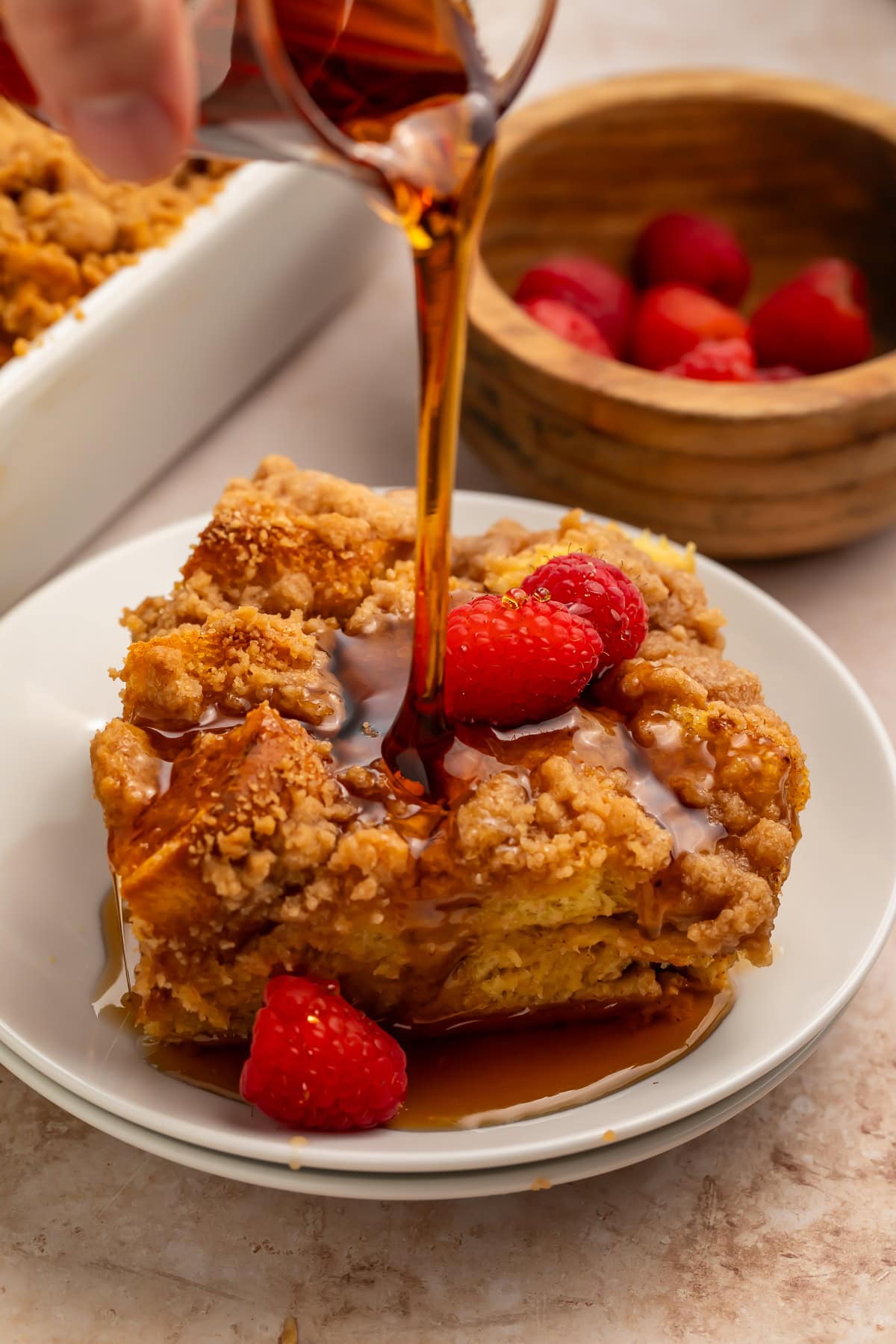
This French toast casserole with brioche has thick, buttery brioche cubes that soak overnight in a rich custard of heavy cream, brown sugar, maple syrup, and warm cinnamon, then baked up pillowy-soft in the center with a crunchy brown sugar streusel topping. So sweet and tasty for gatherings —serve it for Easter brunch, baby showers, holiday mornings, or whenever you want an easy breakfast with almost zero morning effort!
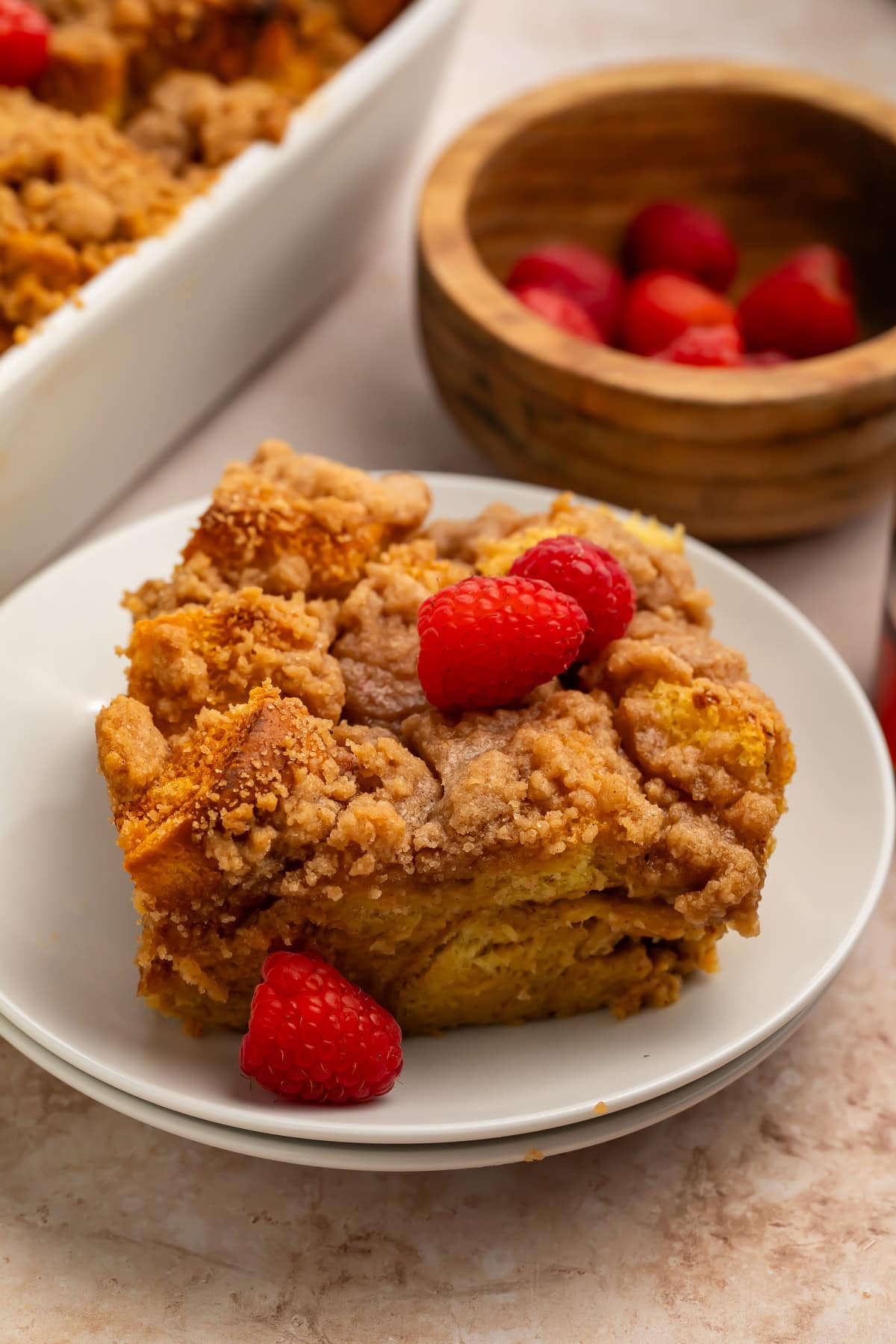
See recipe card below for full list of measurements, ingredients, and instructions.
Why This Recipe is So Good
- You do all the work the night before, then just slide it into the oven while your guests arrive, so it’s the ultimate make-ahead dish. You feel less stressed and end up with a gorgeous, golden casserole that practically makes itself.
- That rich, buttery, egg-enriched Brioche bread soaks up the custard like nothing else and bakes up with a pillowy, almost soufflé-like interior that standard sandwich bread simply cannot replicate. This is not your average French toast bake.
- The streusel topping is non-negotiable. That cold butter, brown sugar, and cinnamon crumble bakes into a caramelized, crackly crust on top while the inside stays soft and custardy. Every single bite has that perfect contrast of textures — and it looks absolutely beautiful on a brunch table!!
- One 9×13 dish serves 12 people, it travels well, and it works for every occasion from a casual holiday morning with the kids to a baby shower brunch. Scale it up, dress it down, add fruit — this French toast casserole with brioche bread is endlessly flexible, which is why I love serving it.

What You Need to Know Before You Start
- Fresh brioche is too soft and moist and will turn your casserole into a soggy mess rather than that gorgeous custardy-but-structured texture you’re going for. It’s best to use day-old bread; if you don’t have any on hand, cube it and spread it on a baking sheet, uncovered, on the counter for a couple of hours, or dry it in a 300°F oven for 15 to 20 minutes. Let it cool before assembling.
- Once you’ve poured the egg mixture over the cubed brioche, use a spatula or your hands to gently press every piece of brioche down into the liquid. You want every single cube coated and actively soaking. Pay special attention to the top layer — it naturally floats and can stay dry if you don’t push it down before covering and refrigerating.
- Keep the streusel refrigerated separately and add it cold, right before baking. If you add the streusel the night before, it absorbs moisture overnight and loses that beautiful crumbly texture. Mix it up, pop it into a covered bowl or zip-top bag in the fridge, and sprinkle it on cold just before the casserole goes into the oven; that contrast between cold streusel and warm casserole gives you that incredible crackly top!
- Pull the casserole out of the fridge 30 minutes before baking; otherwise, the outside can overcook while the center remains cold and underdone. If the top is browning too quickly during baking, loosely tent it with foil for the last 10 to 15 minutes to protect the streusel while the center finishes setting.
Recipe Variations
Make it with Strawberries and Cream Cheese: Scatter sliced fresh strawberries over the bread before pouring the custard, then drop small spoonfuls of softened cream cheese throughout. It bakes into pockets of rich, tangy creaminess throughout the casserole.
Make it with Apples and Caramel: Skip the fruit and add 1½ cups peeled, thinly sliced tart apples (like Granny Smith) layered into the bread cubes. Drizzle caramel sauce over individual servings right before plating for a fall-inspired version that works beautifully for Thanksgiving morning.
Add a Cream Cheese Filling: Beat together 8 ounces softened cream cheese, 2 tablespoons powdered sugar, and ½ teaspoon vanilla until smooth. Spread half the brioche cubes in the dish, dollop the cream cheese mixture over the top, then add the remaining bread cubes before pouring the custard over. This creates a hidden layer of sweetened cream cheese running through the middle — absolutely, positively worth it!!

Frequently Asked Questions
Yes, but you need at least 6 hours for the brioche to fully absorb the custard. In a true pinch, you can soak it for 1 to 2 hours and add an extra 15 minutes of rest time on the countertop before baking, but the texture won’t be quite as luscious as the overnight version.
Challah is the best swap — same egg-enriched richness, same ability to hold up overnight. French bread or thick-cut Texas toast will work in a pinch but won’t give you the same buttery depth. Avoid standard sandwich bread entirely; it turns to mush.
The center should be set and not jiggly when you gently shake the dish, the top should be deep golden brown, and a knife inserted into the center should come out clean without wet custard on it. If the edges are done but the center is still loose, tent with foil and give it another 10 minutes.
More Satisfying Brunch Recipes
- Whole30 Sweet Potato Chilaquiles
- Red Velvet Cinnamon Rolls (From Scratch!)
- Buttery Sausage and Croissant Breakfast Casserole
- Croissant Breakfast Charcuterie Board
- Monte Cristo French Toast Breakfast Casserole
- Whole30 Egg Breakfast Casserole
- Hashbrown Sausage Breakfast Bake
- Healthy Overnight French Toast Breakfast Casserole
- Paleo Tomato Tart Recipe
- Whole30 Quiche with Hash Brown Crust
Making changes to a recipe can result in recipe failure. Any substitutions or variations listed are simple changes that I believe will work in this recipe, but results are not guaranteed.

Overnight Brioche French Toast Casserole

Equipment
- 9×13-inch baking dish
- large mixing bowl
- small mixing bowl
- whisk
- Pastry cutter (optional, if you have it)
Ingredients
Base for French Toast Brioche Casserole:
- 1 large loaf brioche or challah cut into 1-inch cubes (approximately 1 pound)
- 8 large eggs
- 1¼ cups heavy cream
- ¾ cup whole milk
- ¾ cup brown sugar
- 2 tablespoons maple syrup
- 1 tablespoon vanilla
- 1½ teaspoons cinnamon
- pinch salt
Optional Add-In
- 1 to 2 cups blueberries or other fruit
Streusel Topping
- ½ cup cold butter cubed
- ½ cup brown sugar
- ½ cup all-purpose flour
- ¾ teaspoon cinnamon
- Pinch of salt
- ½ cup chopped pecans or walnuts optional

Instructions
Assemble Casserole
- Grease 9×13-inch baking dish with butter or nonstick cooking spray. Add bread cubes in even layer.
- In large mixing bowl, whisk together 8 large eggs, 1¼ cups heavy cream, ¾ cup whole milk, ¾ cup brown sugar, 2 tablespoons maple syrup, 1 tablespoon vanilla, 1½ teaspoons cinnamon, and pinch of salt until smooth and fully combined.
- Pour custard mixture evenly over bread cubes. Press bread down gently with spatula so every cube is coated. If using fruit, scatter 1 to 2 cups blueberries or other fruit over top.
- Cover tightly with plastic wrap and refrigerate at least 6 hours, or overnight is recommended.
Make Streusel
- In small bowl, combine ½ cup all-purpose flour, ½ cup brown sugar, ¾ teaspoon cinnamon, and pinch of salt. Add ½ cup cold cubed butter and cut in with pastry cutter or two forks until mixture resembles coarse, pea-sized crumbles. Stir in ½ cup chopped pecans or walnuts if using.
- Cover and refrigerate streusel until ready to bake. Do not add to casserole overnight.
Bake and Serve
- Remove casserole from refrigerator 30 minutes before baking. Preheat oven to 350°F.
- Sprinkle cold streusel evenly over top of casserole. Bake uncovered 45 to 55 minutes, until center is set and streusel is deep golden brown. If top browns too quickly, tent loosely with foil for remaining bake time.
- Check doneness by inserting knife into center — should come out clean with no wet custard.
- Rest casserole 10 minutes before serving. Serve warm with powdered sugar, maple syrup, whipped cream, or fresh fruit.
Approximate Information for One Serving
Nutrition Disclaimers
Number of total servings shown is approximate. Actual number of servings will depend on your preferred portion sizes.
Nutritional values shown are general guidelines and reflect information for 1 serving using the ingredients listed, not including any optional ingredients. Actual macros may vary slightly depending on specific brands and types of ingredients used.
To determine the weight of one serving, prepare the recipe as instructed. Weigh the finished recipe, then divide the weight of the finished recipe (not including the weight of the container the food is in) by the desired number of servings. Result will be the weight of one serving.
Did You Make This Recipe?
Tag @40aprons on Instagram and be sure to leave a review on the blog post!
















Never Miss A Meal!
New Recipes Straight To Your Inbox
A curated selection of our most recent recipes, delivered straight to your inbox once a week.
Thank you!
You have successfully joined our subscriber list.