
This Post May Contain Affiliate Links. Please Read Our Disclosure Policy.
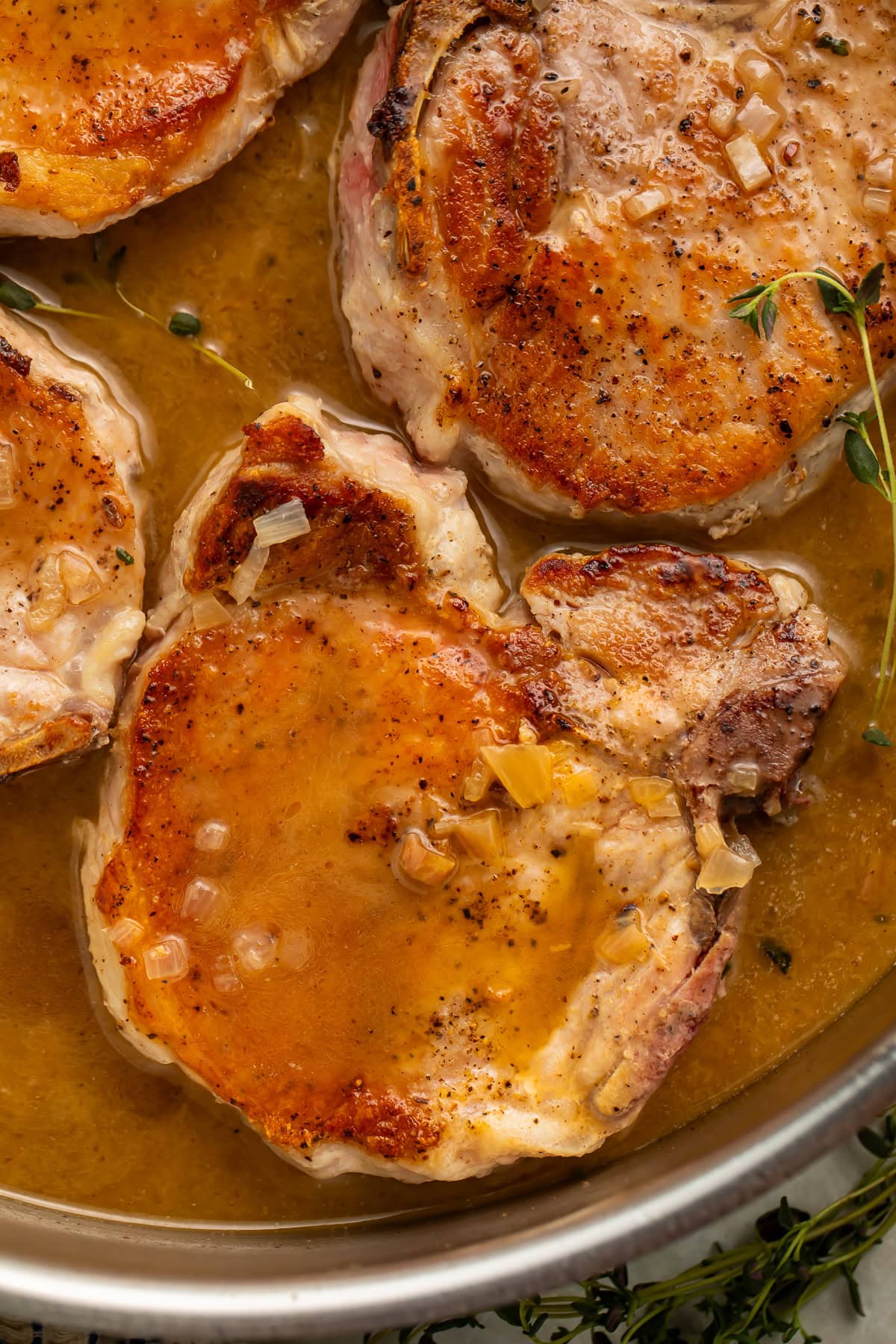
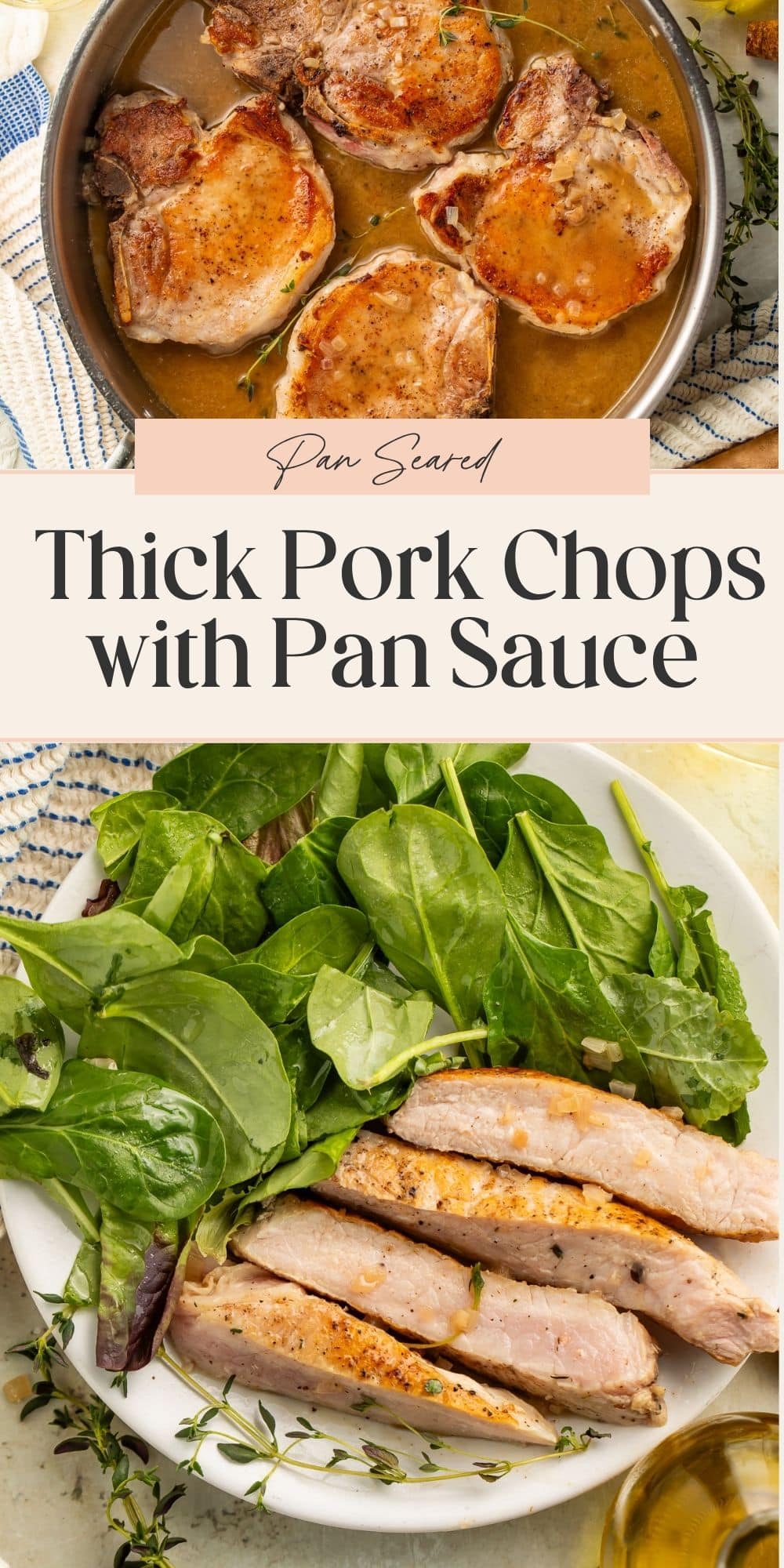
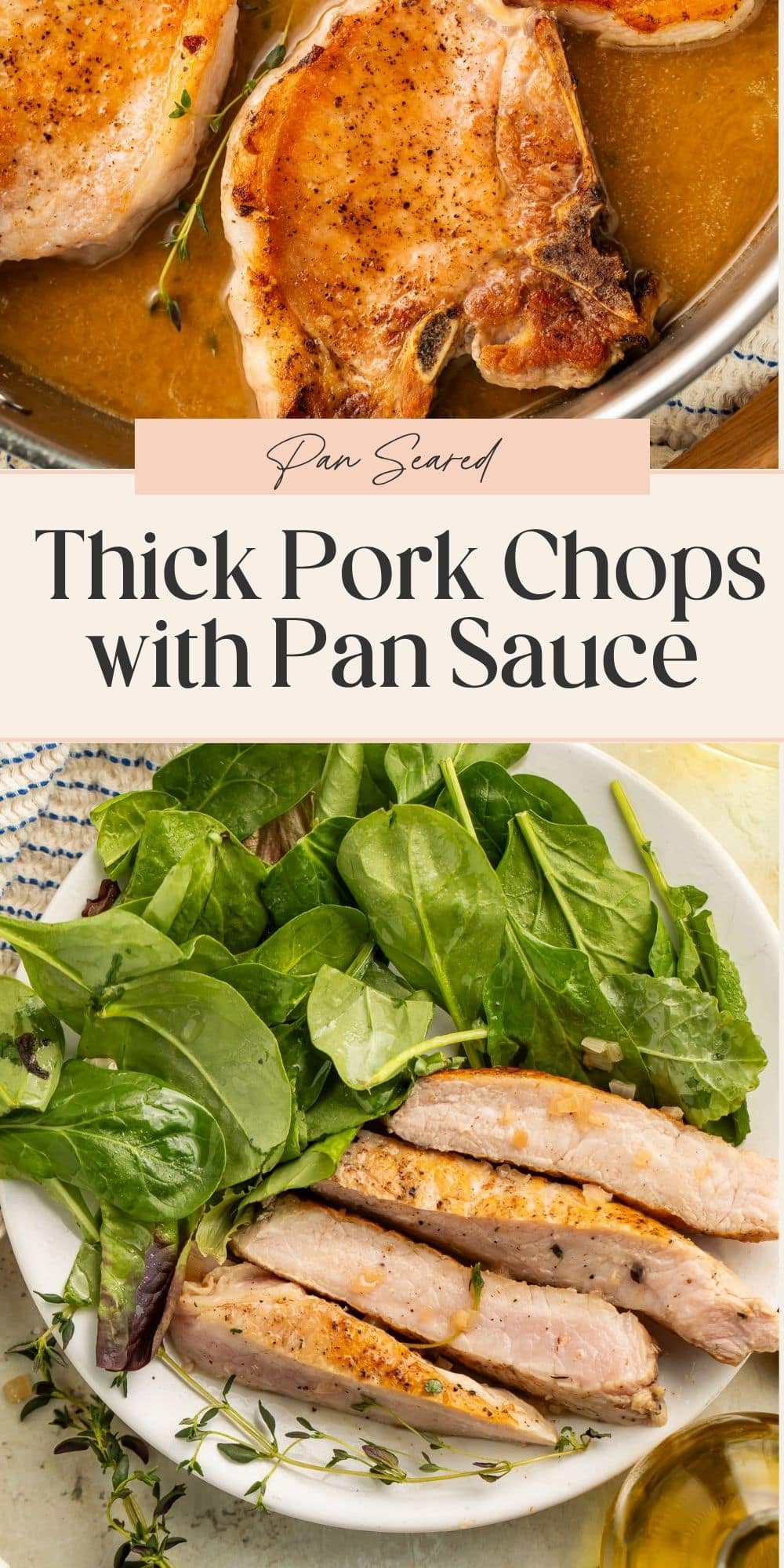
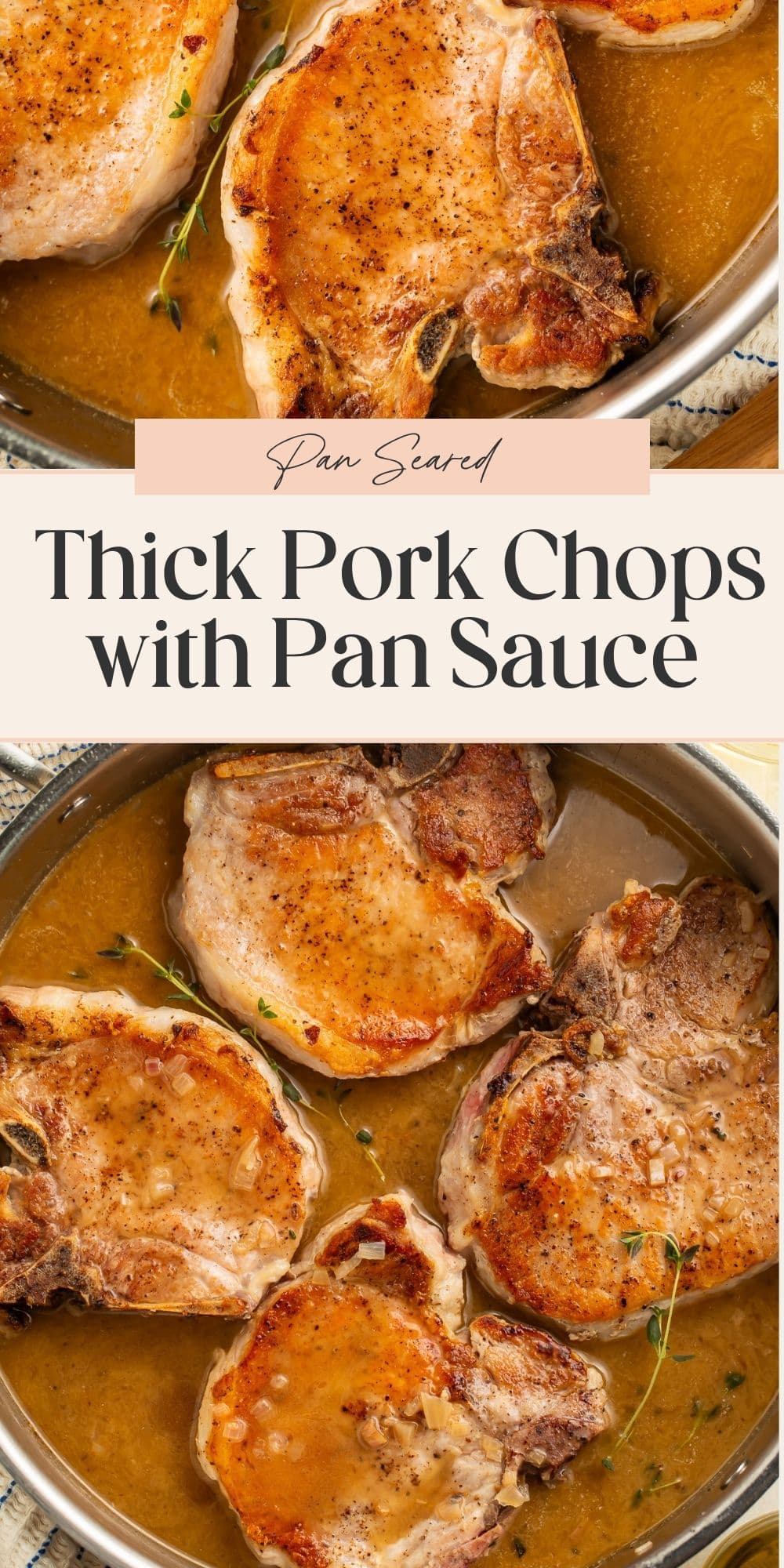
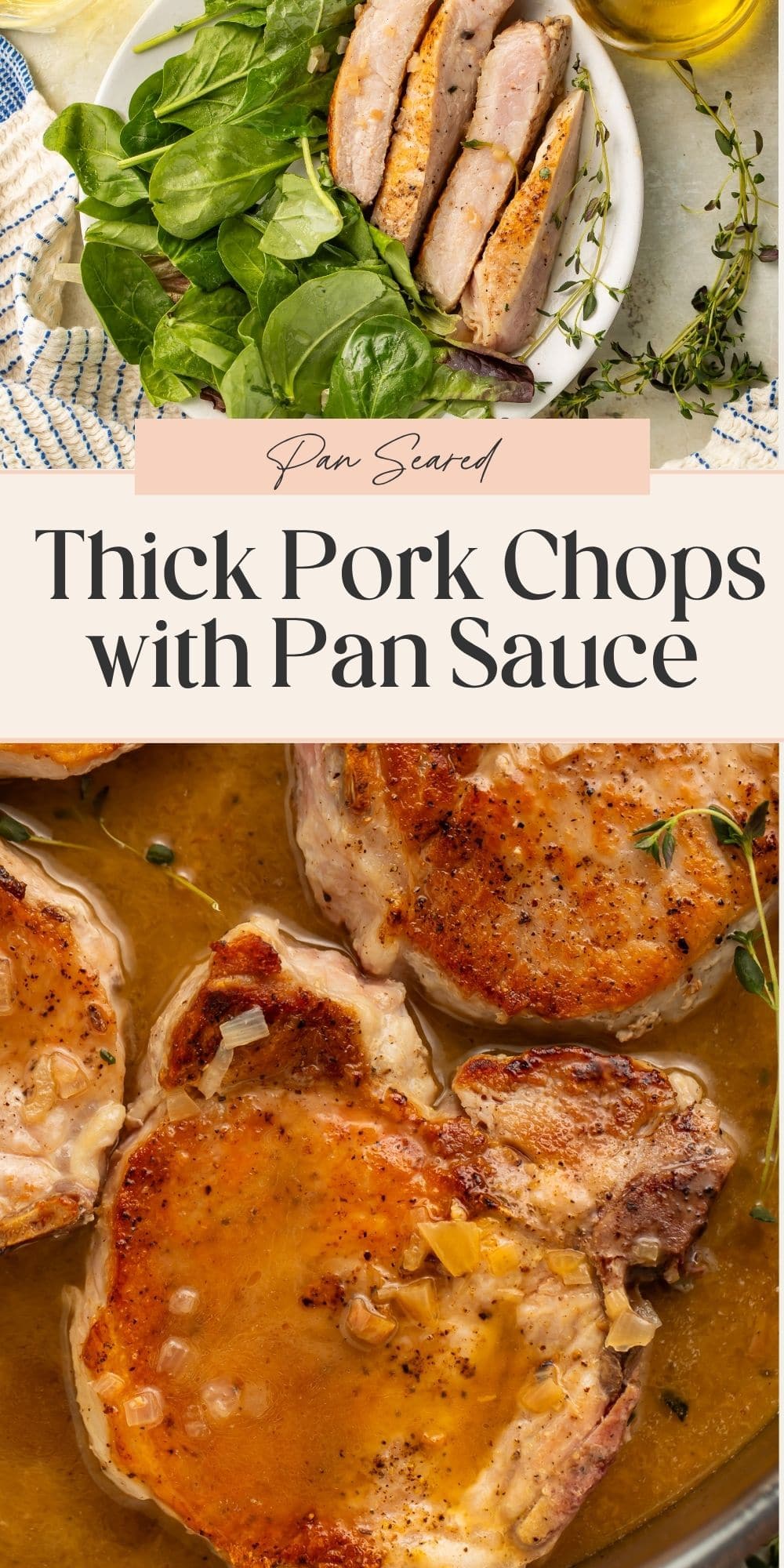
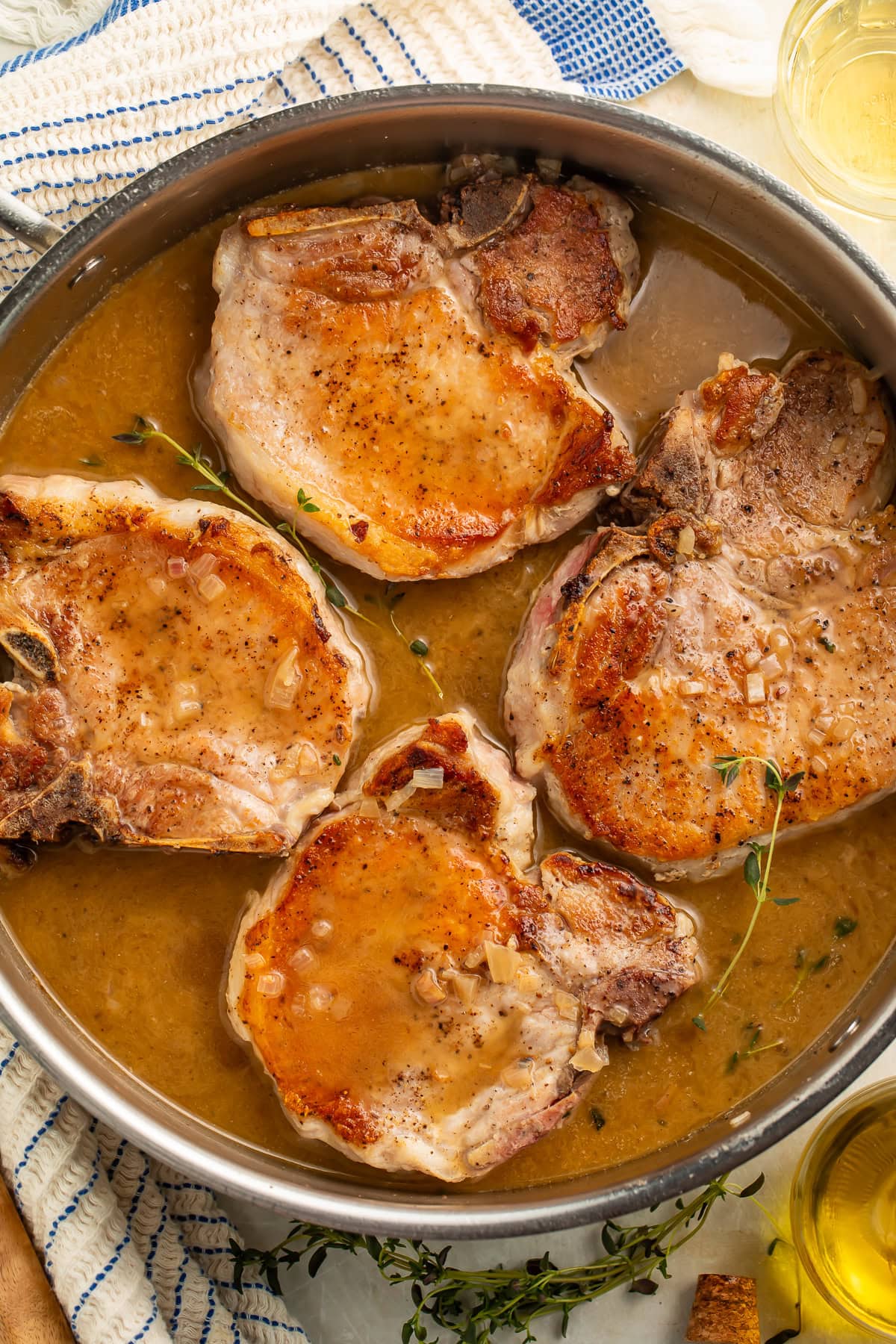
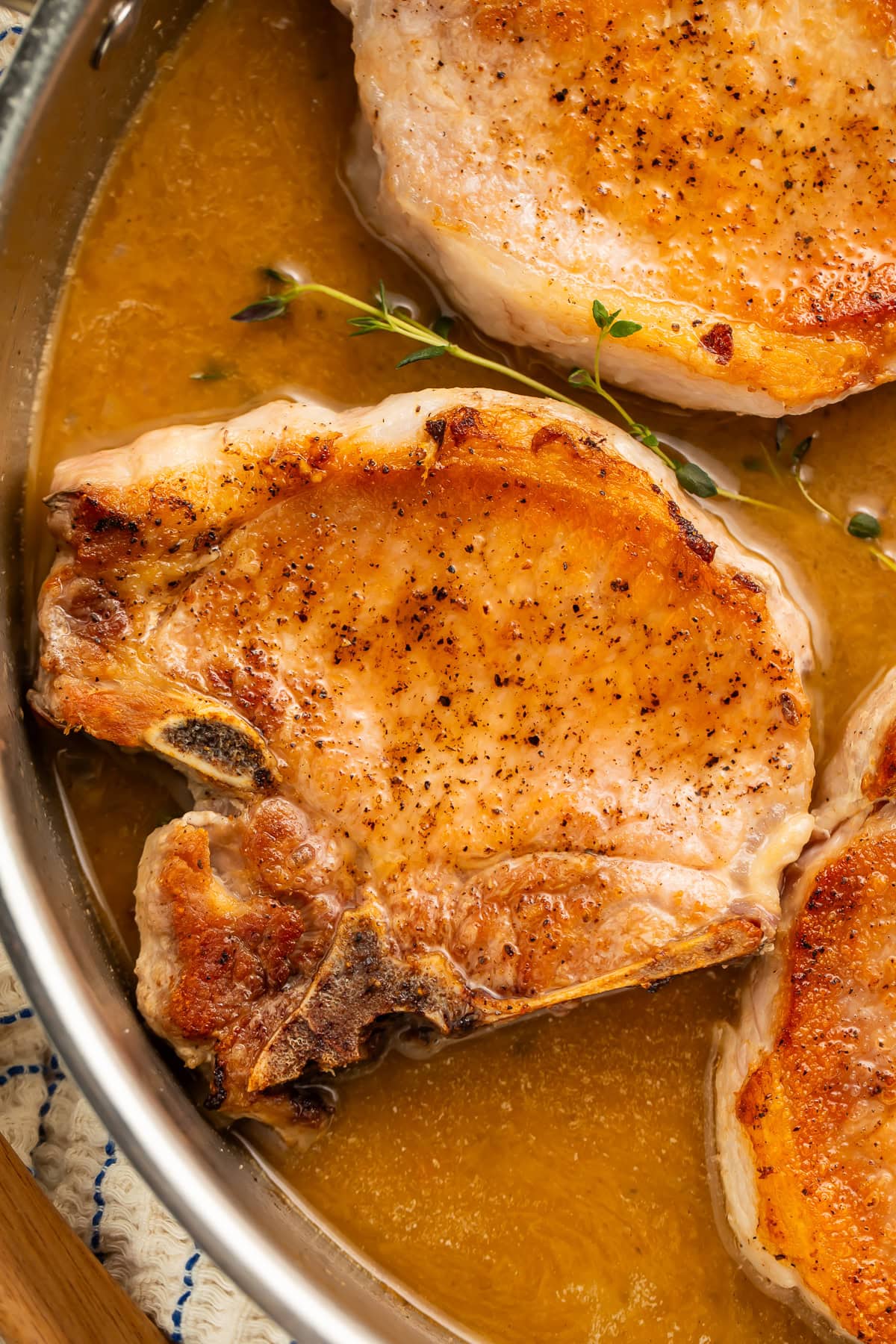
These pan-seared thick pork chops are tender, juicy, and easy to throw together. Finished with a delicious shallot-white-wine sauce, this recipe is perfect to keep in your back pocket, any time you’re craving pork chops!
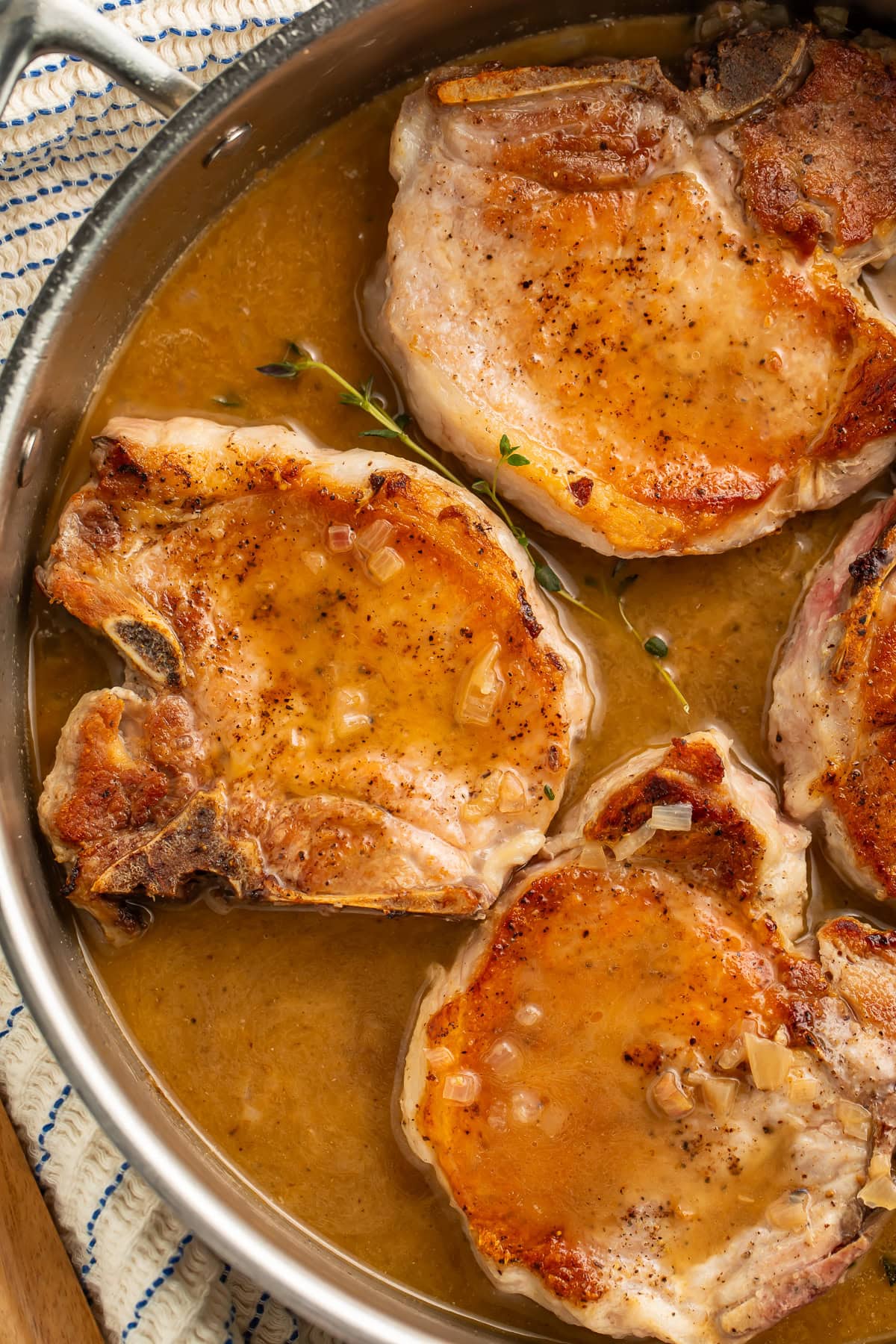
See recipe card below for full list of measurements, ingredients, and instructions.
Why This Is Your New Favorite Pork Chop Recipe
- These pork chops are pan seared for a beautiful, caramlized crust before all the flavor left in the pan from all those brown bits (called the frond) is turned into an easy-yet-elegant shallot and white wine pan sauce while the pork rests. As you’re not trying to cook the pork in the sauce, there are no dried out pork chops here!
- Fancy enough for an at-home date night these pork chops also only take 30 minutes, also making them perfect for busy weeknights!
- With just a handful of simple ingredients this pork chop method is also naturally gluten free.

What I Learned Testing This Recipe
- I found that chops that were about 1–1½ inches thick were best for pan frying. They were thick enough I could get a lovely golden crust on them without overcooking, and so that they could stay in the pan for long enough without burning for the meat around the bone to cook properly.
- For the best crust, try and move the chops around in the pan as little as possible. It is super important to leave the pork untouched and in contact with the pan for as long as you can for a good crust to form.
- Make sure your pan is big enough to fit the pork chops in a single layer with at least an inch around each chop. This will make sure you get a good crust; overcrowding the pan will cause them to steam not sear! If you don’t have a big enough pan, cook the chops in batches instead.
- A seasoned skillet provided the best crust on the pork during testing, but a non-stick frying pan also gave good results.
- Don’t forget the fat cap. The fat cap is the layer of slightly thicker fat running along the edge of both pork and lamb chops, as well as some cuts of steak. Make sure you leave it in contact with the pan to cook properly and caramalize so you don’t get rubbery, undercooked pork fat on your plate, even if you’ve trimmed most of it off before cooking (don’t do this unless your chops are particularly fatty, as the fat cap helps stop the pork frying out in the pan!) I like to do this at the start of cooking for best results.
Ingredients
Thick, bone-in pork chops – You can also use boneless chops, you’ll just need to reduce the amount of time they spend in the pan. Pork chops require an internal temp of 145°F, so pull them when they reach 140°F as they’ll reach the final 5°F during resting.
Plenty of salt and pepper – Not only do these add seasoning to the pork, but the salt will help draw out the moisture and help you get that lovely golden crust on your chops.
Avocado oil – Or any other neutral oil with a high smoke point for cooking the chops.
Finely minced shallots – These will form the backbone of the sauce. You could sub white or brown onion, but you won’t get the same refined taste in the sauce. It will still be tasty, though!
Dry white wine – Sub with chicken stock if you prefer not to use any alcohol in your cooking.
Chicken stock – Choose a low sodium variety if you can so you can control the amount of salt you add to the overall dish.
Fresh woody herbs – I’ve used thyme here, sage and rosemary will also be delicious.
Unsalted butter – Again, you could use salted butter, but by finishing the sauce with unsalted butter you can control the amount of salt yourself.
Serving and Storage Suggestions
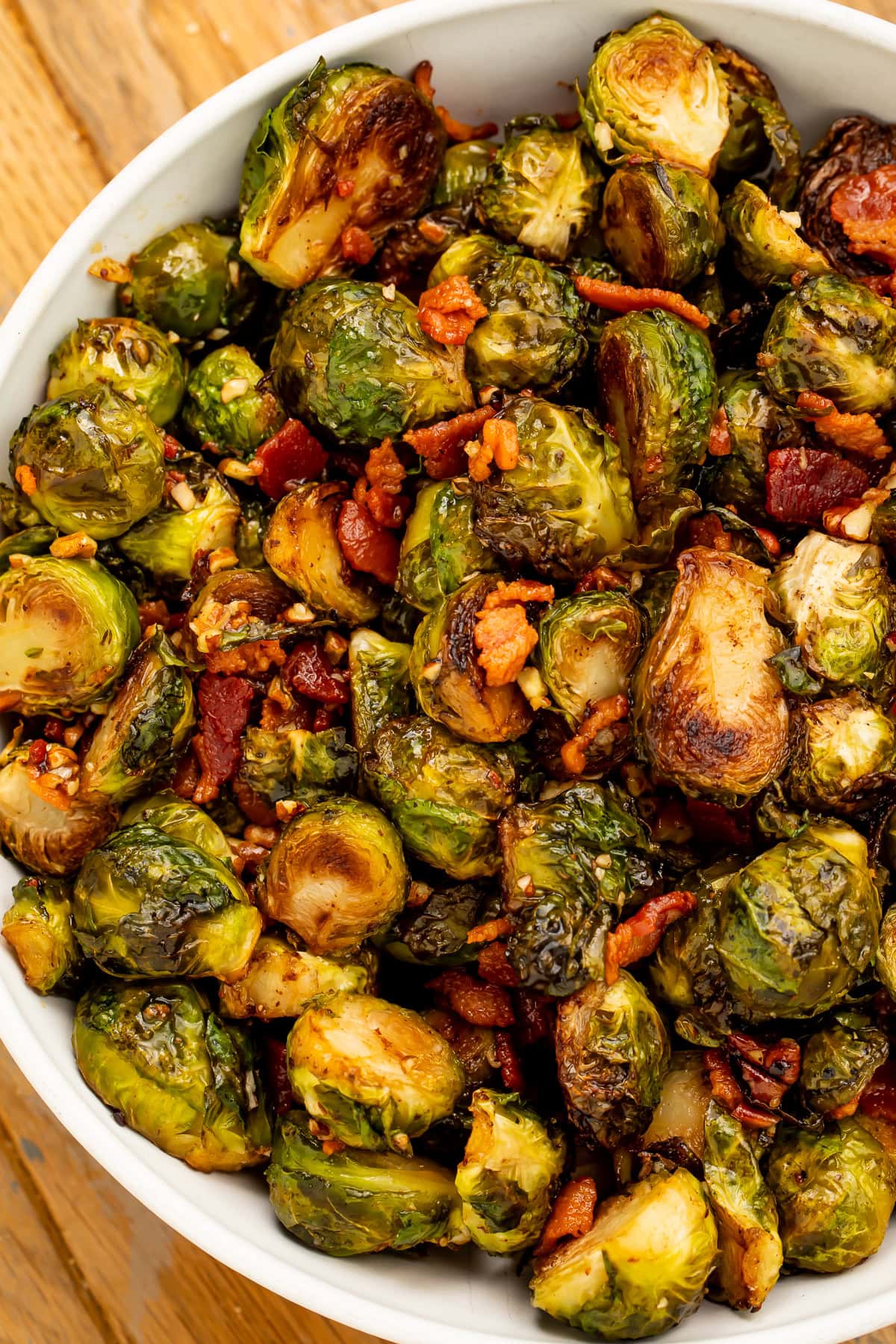
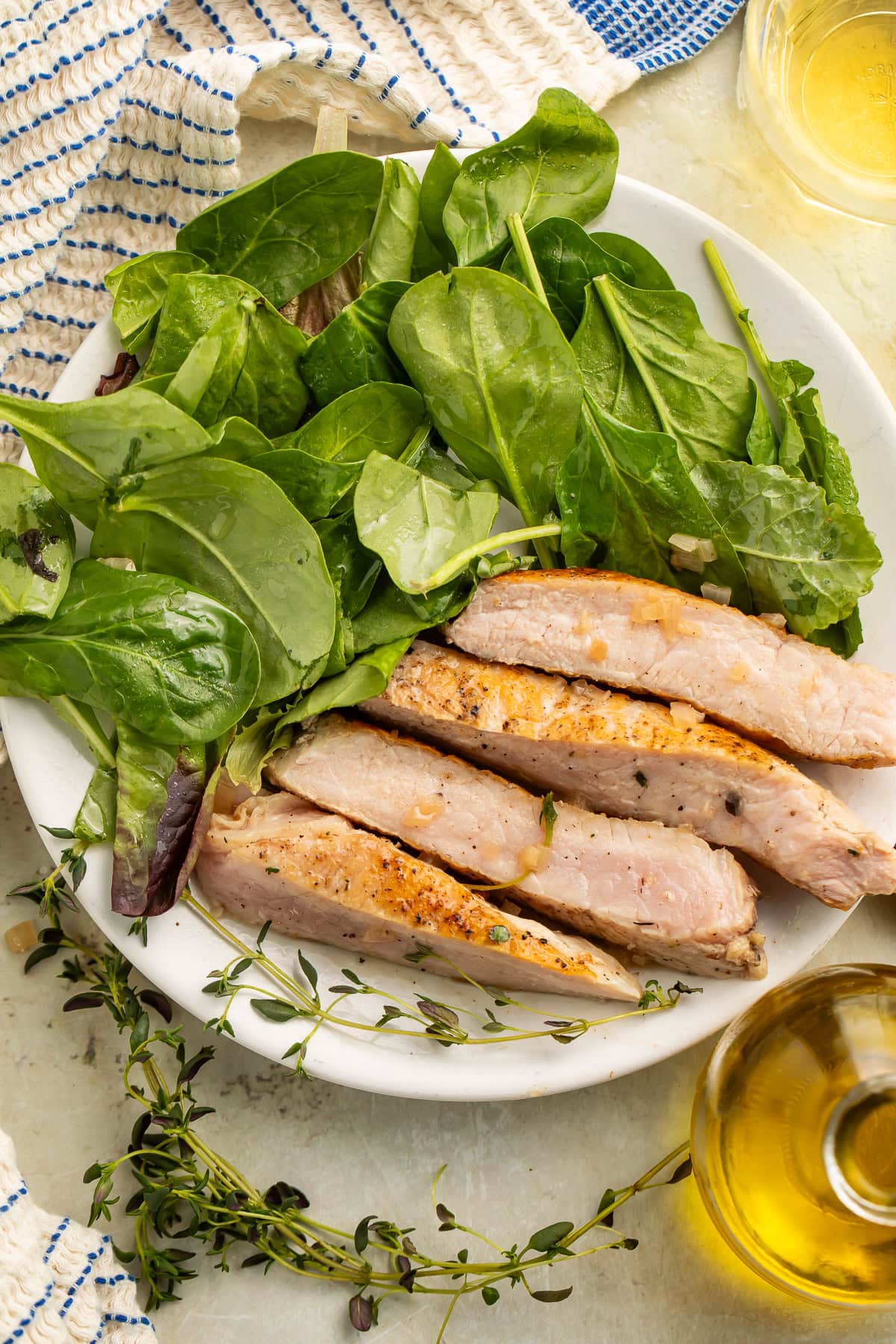
Pork chops served with plenty of sauce are just calling out for mashed potatoes! Brown rice would also be tasty for a healthier option. I would also add something green like green beans, broccoli, or roasted kale.
This is not a dish I’d recommend re-heating as the pork will end up overcooked — just cook the amount of pork chops you need and scale the sauce accordingly!
Frequently Asked Questions
Yes! For a creamy sauce simply stir in a little heavy cream at the end with the butter until you get your desired level of creaminess.
You can. Use my go-to pork chop brine, and make sure you’ve patted the pork chops dry of any excess moisture before pan frying otherwise you won’t get that delicious golden crust.
Making changes to a recipe can result in recipe failure. Any substitutions or variations listed are simple changes that I believe will work in this recipe, but results are not guaranteed.
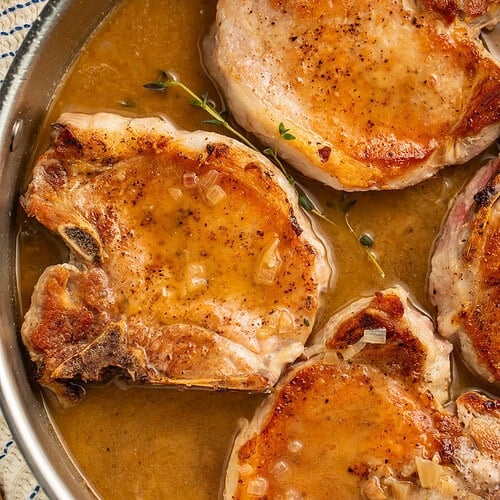
Pan Seared Pork Chops with Shallot and White Wine Pan Sauce

Equipment
- cast iron skillet or large non-stick frying pan
Ingredients
- 4 thick bone-in pork chops about 1- 1½ inches thick
- plenty of salt and pepper
- 2 tablespoon avocado oil plus more as needed
Pan Sauce (optional)
- ½ cup finely minced shallots
- 1 cup dry white wine or chicken stock
- 1 cups chicken stock
- 3-4 sprigs fresh herbs like thyme, rosemary, sage, etc.
- 4 tablespoons unsalted butter

Instructions
- Pat the pork chops as dry as you can with kitchen paper to remove any excess water. Generously, season both sides of the chops with salt and pepper.
- Heat a large cast iron skillet over medium-high heat. Add 2 tablespoons of oil and heat until the oil is shimmering.
- Place the pork chops in pan, working in batches if the pan is not big enough to fit the chops in a single layer with plenty of space around them. Sear on each side between 4-6 minutes until sides are nicely golden and firm with a little give to the touch. Transfer to plate and let rest at least 5 minutes while you make sauce.
For the Pan Sauce
- Discard all but 2 tablespoons remaining fat from skillet, then return skillet to heat. Reduce heat to medium-low.
- Allow skillet to cool slightly, then add minced shallots. Sauté shallots, stirring frequently, approximately 2 to 3 minutes or until softened.
- When shallots have softened, add the white wine to deglaze skillet. Stir to incorporate wine, making sure to scrape up any browned bits of chicken that might be stuck to bottom of skillet.
- Increase heat under skillet to medium-high. Allow mixture to boil until liquid is reduced by 50%. If you're using just chicken stock, increase the heat but skip this step and add all the stock at the same time.
- Add chicken stock to skillet and bring liquid to boil again. Boil mixture until liquid has reduced by 50%. Mixture should be slightly thick, resembling sauce rather than soup.
- Stir in the fresh herbs of choice, then remove skillet from heat. Allow the mixture to cool slightly, then add butter and whisk until it has completely melted. Taste the sauce and add salt as desired.
- Serve the rested pork chops in the sauce.
Approximate Information for One Serving
Nutrition Disclaimers
Number of total servings shown is approximate. Actual number of servings will depend on your preferred portion sizes.
Nutritional values shown are general guidelines and reflect information for 1 serving using the ingredients listed, not including any optional ingredients. Actual macros may vary slightly depending on specific brands and types of ingredients used.
To determine the weight of one serving, prepare the recipe as instructed. Weigh the finished recipe, then divide the weight of the finished recipe (not including the weight of the container the food is in) by the desired number of servings. Result will be the weight of one serving.
Did You Make This Recipe?
Tag @40aprons on Instagram and be sure to leave a review on the blog post!














Never Miss A Meal!
New Recipes Straight To Your Inbox
A curated selection of our most recent recipes, delivered straight to your inbox once a week.
Thank you!
You have successfully joined our subscriber list.