
This Post May Contain Affiliate Links. Please Read Our Disclosure Policy.
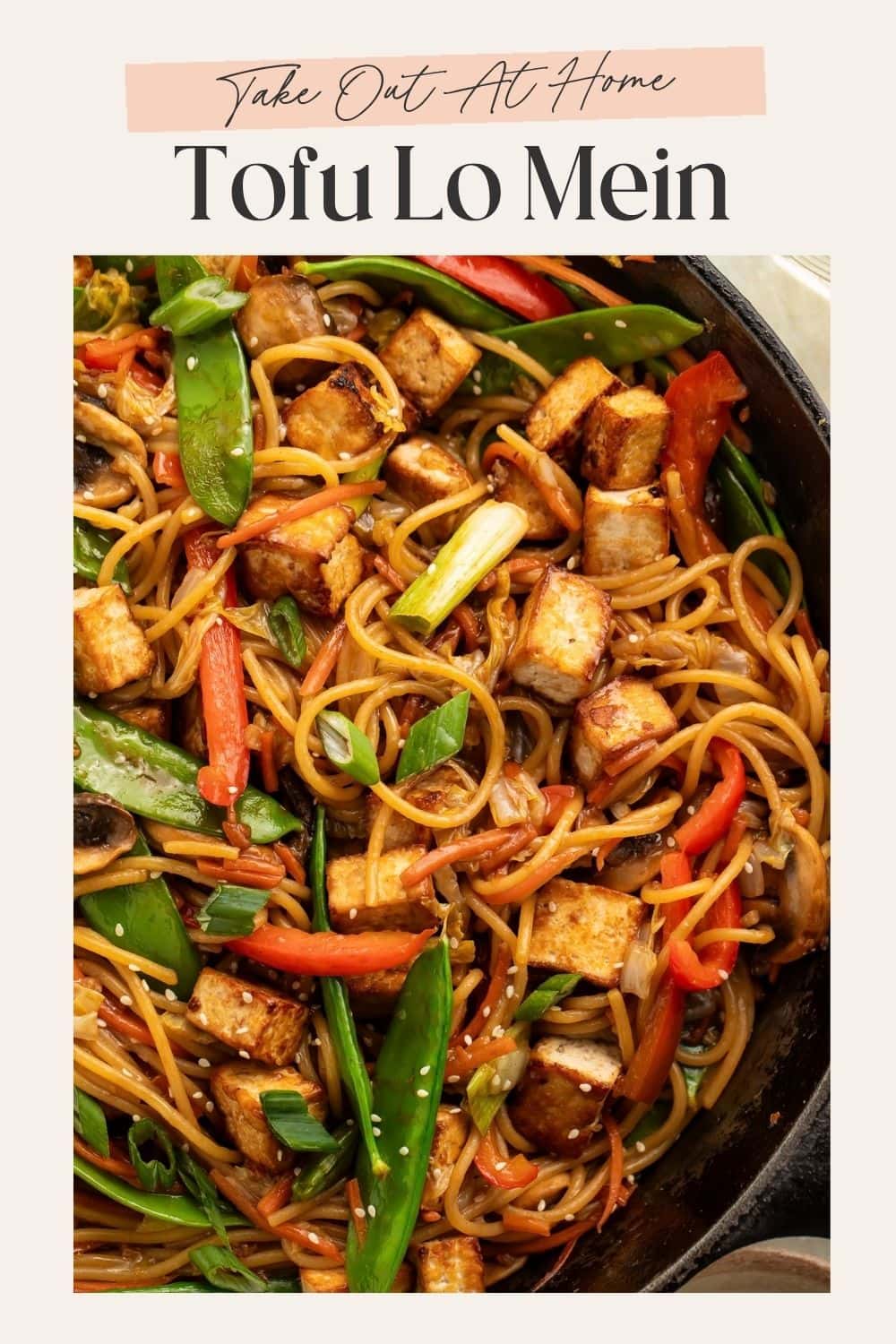
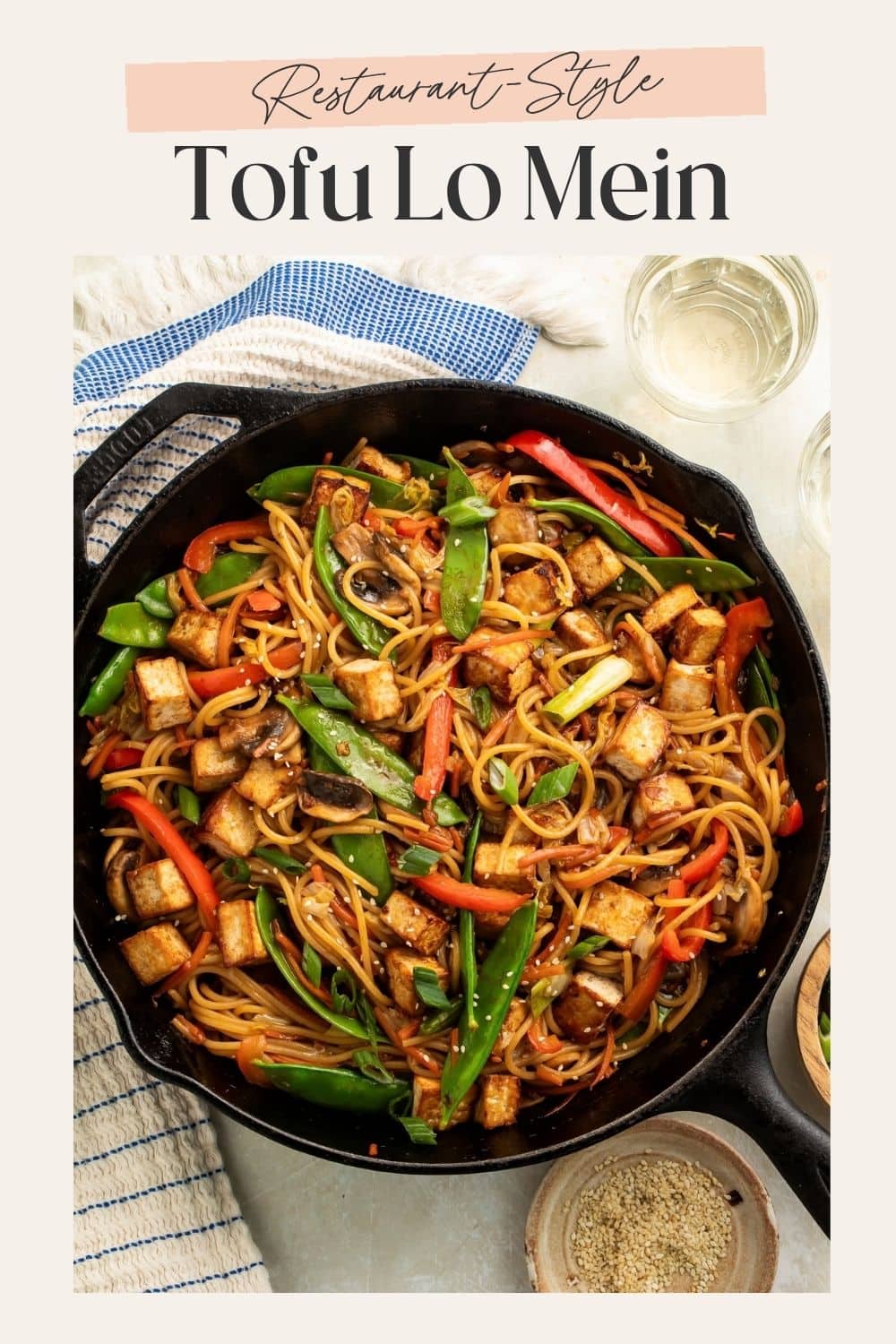
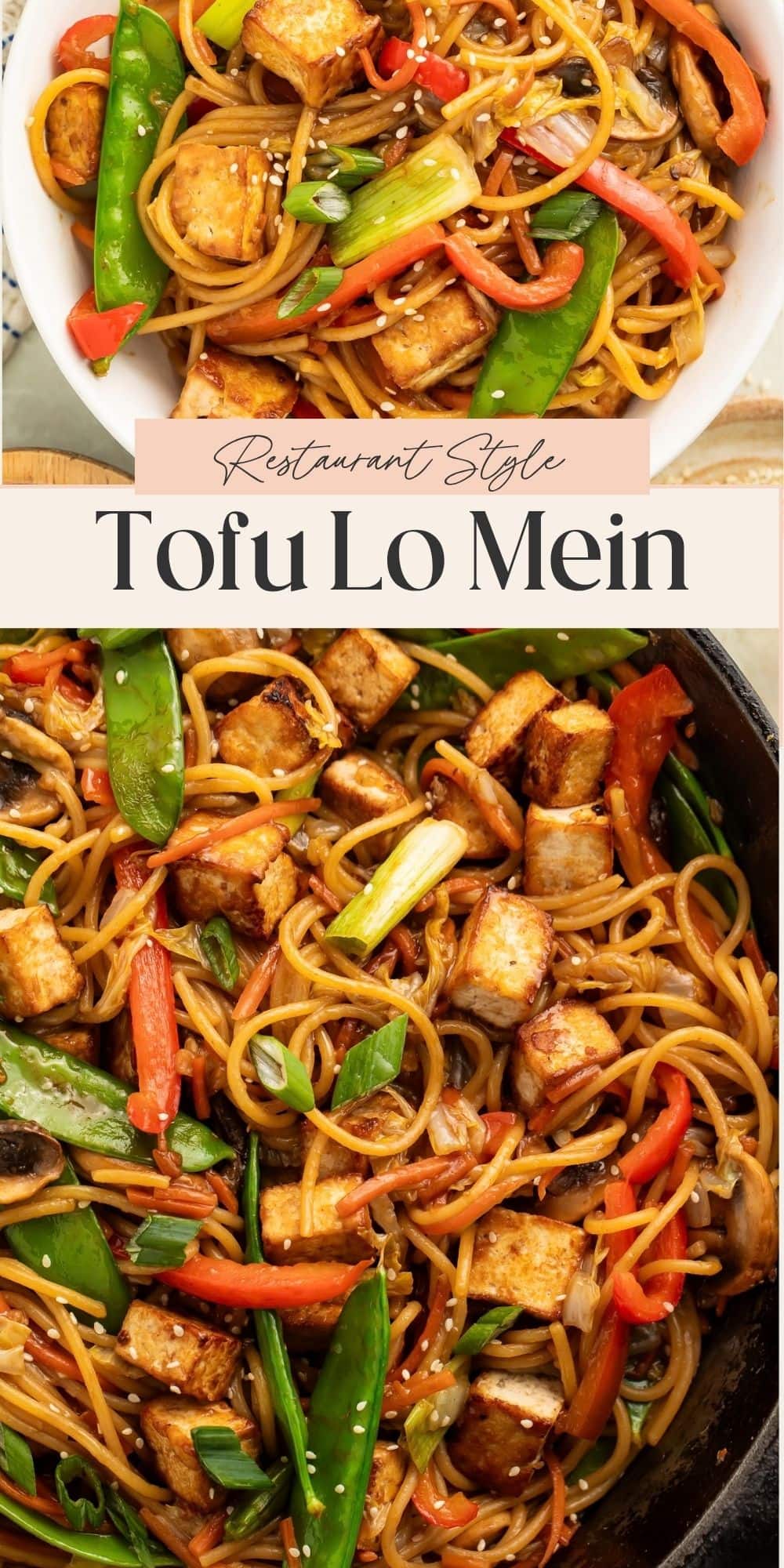
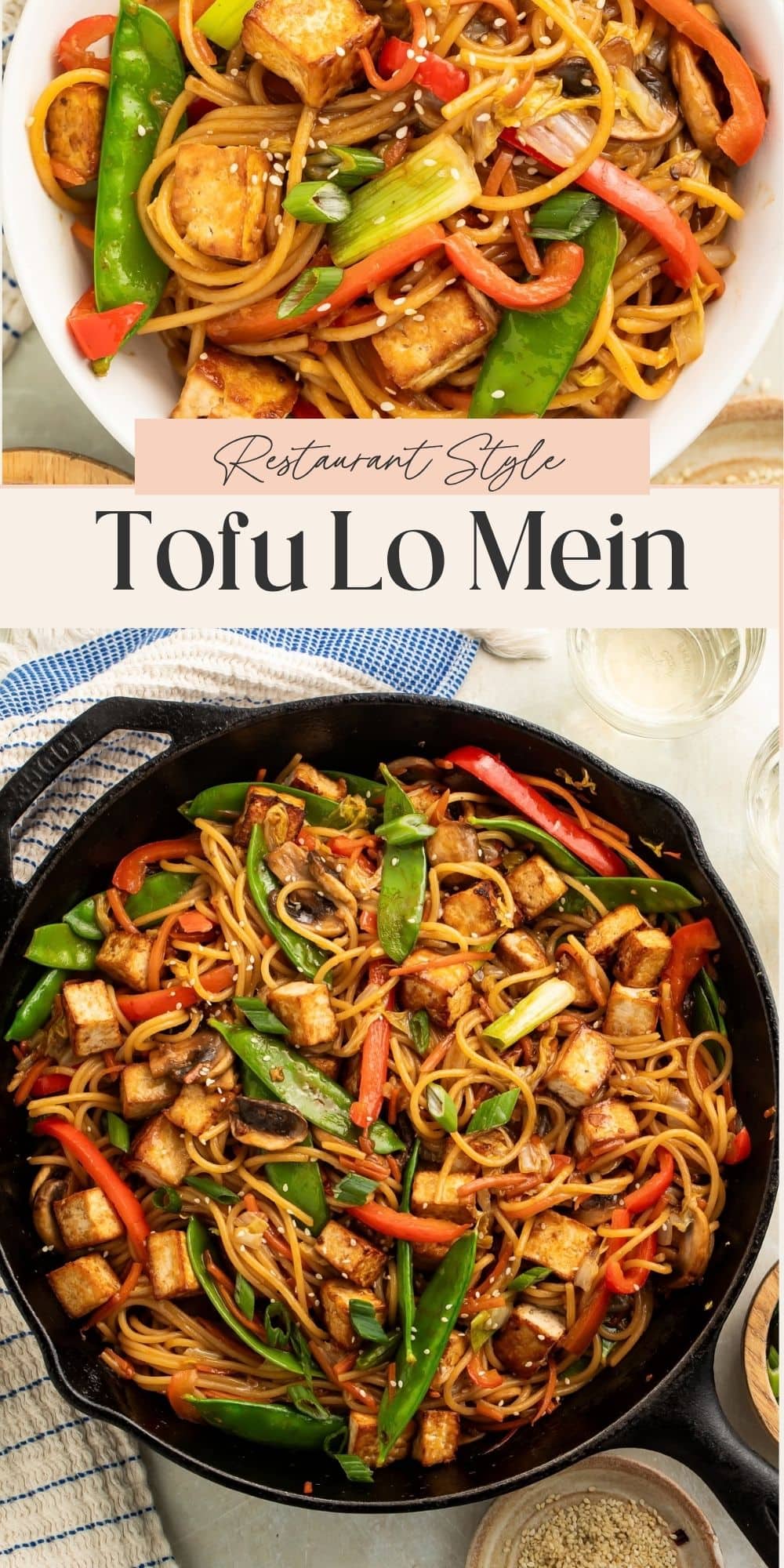
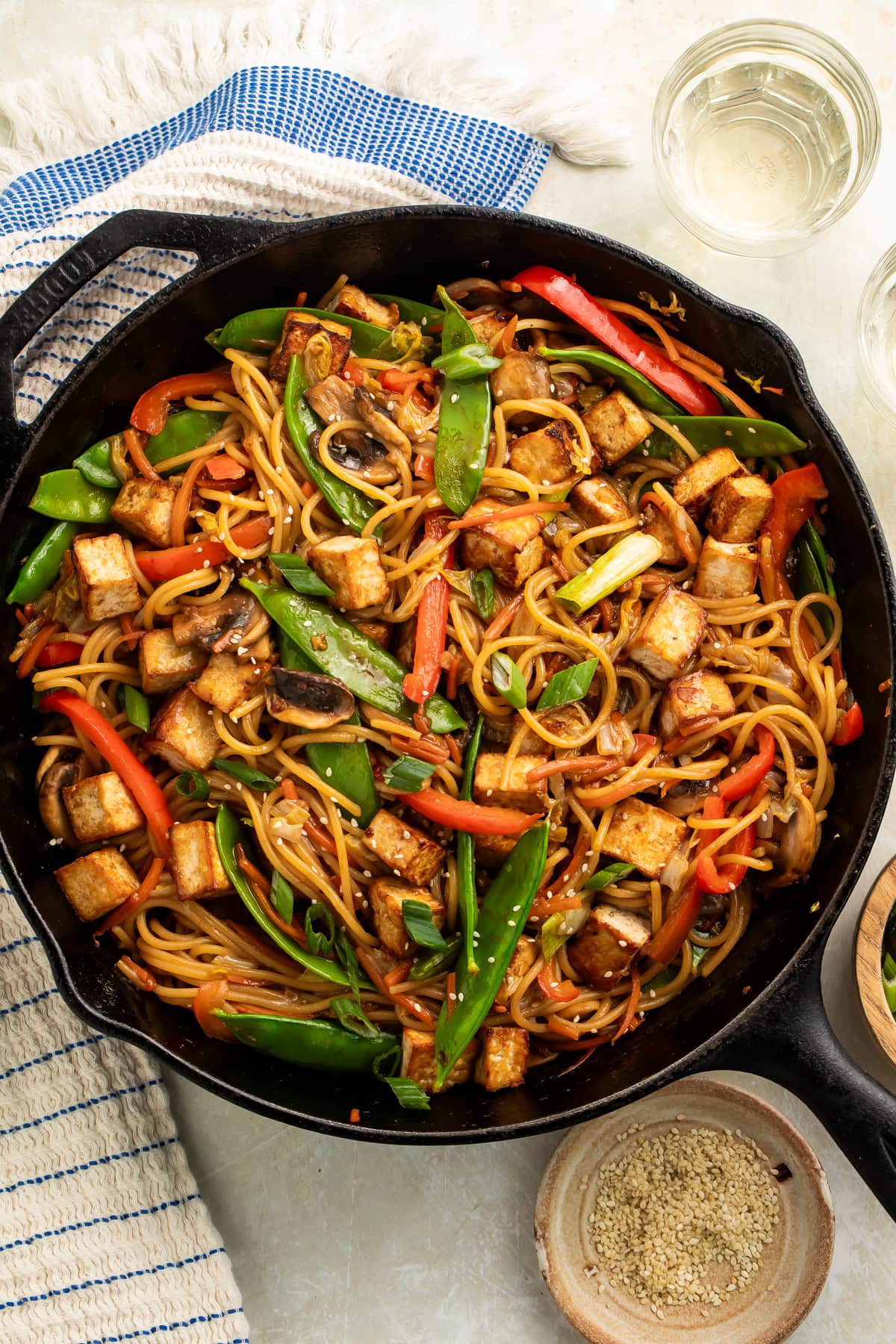
This tofu lo mein recipe pairs crispy tofu, tender noodles, plenty of veggies, and the most delicious sesame-soy sauce for a vegetarian better-than-takeout dinner which is on constant rotation in our house. It’s delicious as leftovers too, so perfect for batch cooking!
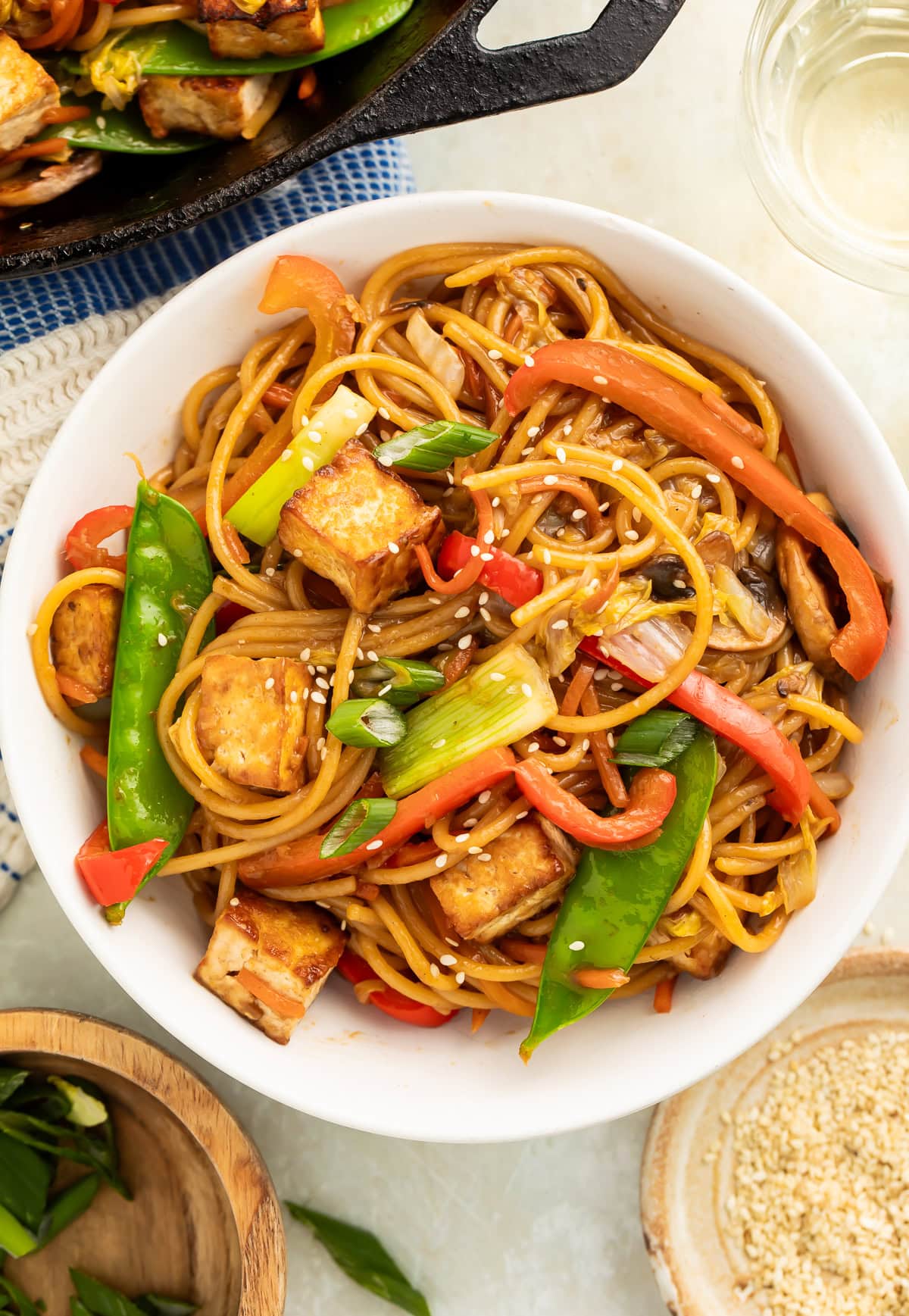
See recipe card below for full list of measurements, ingredients, and instructions.
Why This Is Your New Favorite Noodle Recipe
- This saucy tofu lo mein recipe pairs crispy firm tofu chunks, your choice of vegetables, noodles and an easy stir fry sauce for a crowd-pleasing, better-than-takeout dinner which I find really easy to make from scratch, but even simpler if I’ve done weekend meal prep and I’ve got a load of pre-chopped veg in the fridge!
- The tofu is marinated in the stir fry sauce for an extra hit of flavor before it is fried to get nice crispy edges — no bland or boring tofu here!
- Also, we’re gradually adding the sauce rather than just throwing it all into the pan at once to make sure we get perfectly saucy noodles that don’t turn too thick or gummy.


What I Learnt Testing This Recipe
- I find the quickest way to get this lo mein on the table is to marinate the tofu first, then use that time to prep all the vegetables.
- You can’t skimp on pressing the tofu. I’ve tried it to save time, and it just steamed rather than browned in the skillet, and the sauce didn’t stick. About 15-20 minutes should be plenty, and you don’t need a specialised tofu press — a plate weighted on top works really well!
- Also, don’t skip on rinsing the cooked noodles under the cold tap. This removes excess starch and stops them sticking together, becoming mushy, and making the sauce gluey when everything comes together in the pan. I’ve found this simple step massively improves the quality of the finished dish.
- Don’t add all the sauce at once. Different brands of noodles will need different amounts, so add it gradually and use your judgement to get the perfect bowl of noodles!
Ingredients
Lo mein egg noodles – Or spaghetti. I’ve written this recipe for dry noodles, but you can use fresh but make sure follow the package directions to avoid overcooking them.
Sesame oil – Using sesame oil as the cooking oil will help impart that authentic, takeout-style lo mein taste!
Green onions – Sliced into 1/2” pieces, white and green parts separated.
Julienne cut or chopped vegetables – I’ve had good results using carrots, red peppers, napa or green cabbage, bok choy, mushrooms, and broccoli.
Extra firm tofu – Drained and pressed, then cubed. You want extra firm to get nice crisp edges, as softer varieties might fall apart and crumble in the pan.
Soy sauce – You can also use light tamari or coconut aminos depending on your diet.
Dry white wine – Don’t worry, the alcohol will cook off in the sauce! I find a Sauvignon Blanc or Pinot Grigio works well, but if you really need this dish to be wine-free sub water instead.
Oyster sauce – Use a vegetarian, mushroom-based version if you need these noodles to be vegetarian or vegan friendly!
Garlic-ginger paste – Or 1 ½ teaspoons minced ginger + 1 ½ teaspoons minced garlic.
Cornstarch – This will help both thicken the sauce and crisp up the tofu pieces.
Serving & Storage Suggestions
This tofu lo mein is a complete meal, but you could also add something like my seaweed salad or Japanese cucumber salad on the side, or a few appetizers like chicken satay, air fryer egg rolls or tempura shrimp!
Leftovers will keep in the refrigerator for up to 4 days. Reheat in a skillet over medium heat with a splash of water. Stir frequently until heated through. This helps loosen the sauce as the noodles tend to absorb it in the refrigerator.
Frequently Asked Questions
Try to cut them into similarly sized, thin pieces so they cook at roughly the same rate. Vegetables like carrots and broccoli which tend to take longer to cook should be cut smaller or thinner than quick-cooking vegetables such as cabbage so that everything cooks at the same rate.
Yes, I find that fresh vegetables have the best texture. Frozen ones won’t have the same bite I find really elevates a noodle dish. If you want to use frozen vegetables, add them directly to the hot pan and cook until heated through and any excess water has evaporated before adding the noodles and continuing with the recipe.
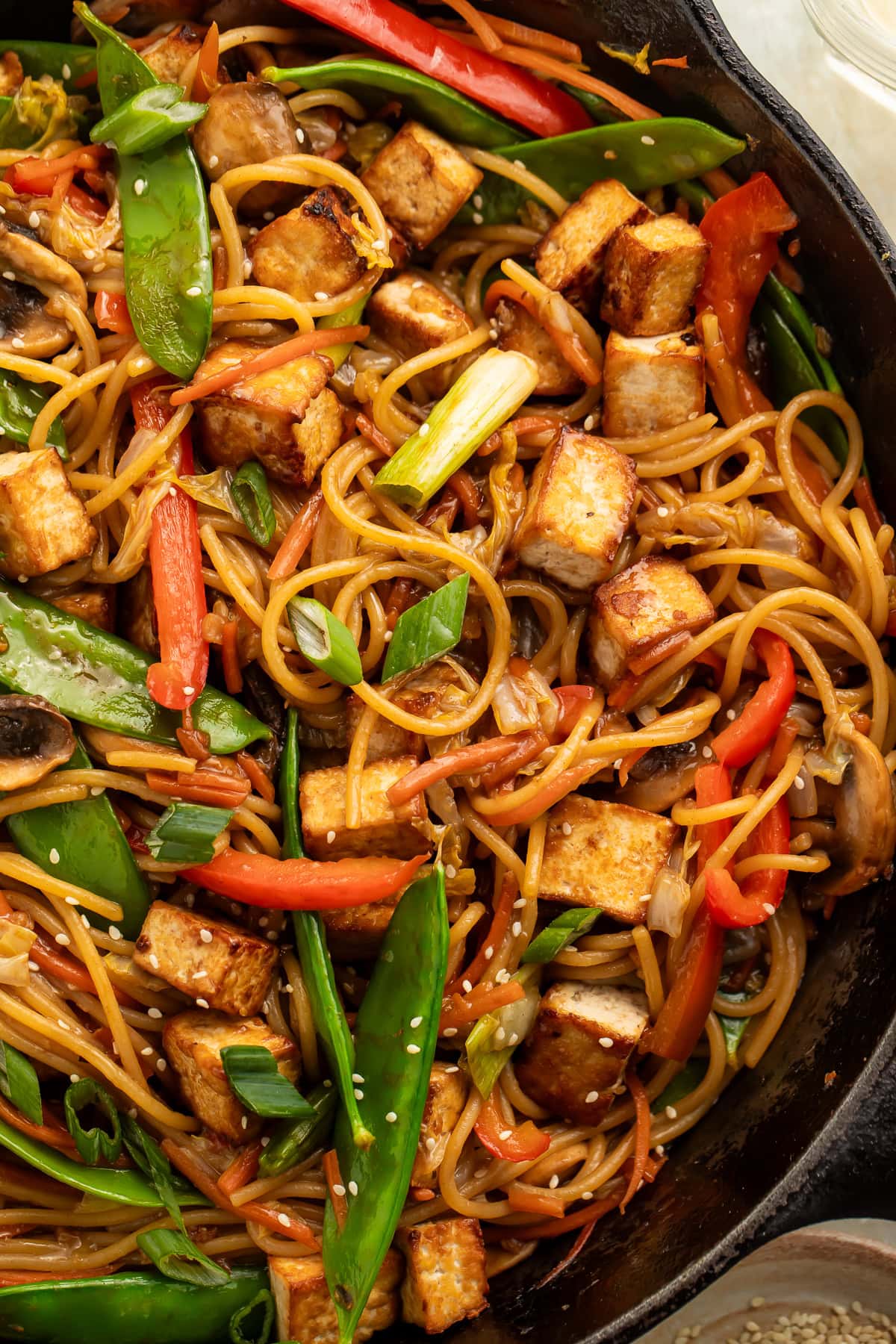
No! As you can see from the pictures I find that a big cast iron skillet works really well for stir fries.
Tofu often sticks as it browns, but it releases once the underside has browned. If you make sure you have a properly heated pan and enough oil to cook the tofu properly you should be fine!
Making changes to a recipe can result in recipe failure. Any substitutions or variations listed are simple changes that I believe will work in this recipe, but results are not guaranteed.
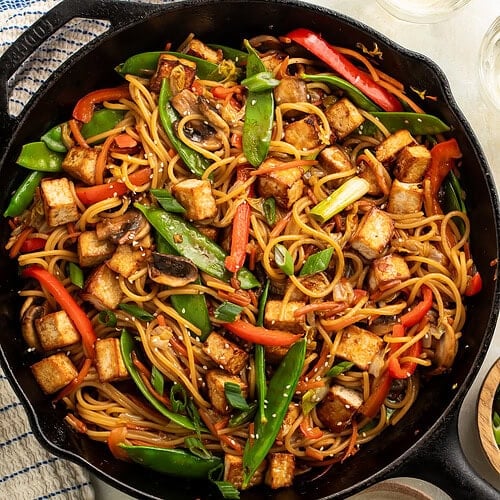
Tofu Lo Mein Noodles

Equipment
- large wok or cast iron skillet
Ingredients
- 8 ounces lo mein egg noodles or spaghetti
- 2 tablespoons sesame oil
- 3 green onions sliced into 1/2” pieces, white & green parts separated
- 3-4 cups julienne cut or chopped vegetables like carrots, red peppers, napa or green cabbage, bok choy, mushrooms, or broccoli
- block of extra firm tofu drained and pressed, then cubed
FOR THE SAUCE
- 5 tablespoons soy sauce or coconut aminos, or lite tamari
- 3 tablespoons dry white wine Sauvignon Blanc or Pinot Grigio
- 3 tablespoons oyster sauce
- 1 tablespoon sesame oil
- 1 tablespoon garlic-ginger paste or 1 ½ teaspoons minced ginger + 1 ½ teaspoons minced garlic
- 1 ½ tablespoons cornstarch

Instructions
- First, press the tofu. Wrap the tofu in 2 layers of paper towels, and place on a plate. Put another plate on top of the tofu to weigh it down. Leave it for about 15-20 minutes.
- Meanwhile, set a pot of water on high heat and bring to a boil, then cook your noodles as per the packets instructions until JUST al dente. When done, immediately drain and rinse with cold water.
- To make the stir fry sauce, add soy sauce, dry white wine, oyster sauce, sesame oil, garlic-ginger paste, and cornstarch to medium bowl. Whisk well until ingredients are fully combined and cornstarch is dissolved. Set bowl aside.
- To marinate the tofu, pour 1 tablespoon of the sauce over tofu and toss gently to coat. Leave to marinate while you chop the vegetables.
- Heat 1 tablespoon of sesame oil in large heavy skillet or wok over high heat. Add tofu and cook, without stirring, until the pieces are brown on the bottom and release easily from the pan. If it sticks, keep cooking, adding more oil if necessary. Stir and cook until golden on another side or two, then transfer to plate.
- Heat the remaining 1 tablespoon of sesame oil in a large wok or skillet over medium heat. Add the green onions (white parts) and vegetables to the hot pan. Stir fry until fork tender and green onions are softening, about 5 minutes. Add 2 tablespoons of water to loosen the browned bits up off the bottom of the pan. Let cook til water has evaporated.
- Remove from the heat. Let everything cool about 1 minute then add the cooked noodles and about half of the sauce – toss around in the hot pan to combine. Add more sauce if needed until color of noodles looks just right (medium brown, not dark, not light). Top with green parts of green onions and sesame seeds to serve.
Approximate Information for One Serving
Nutrition Disclaimers
Number of total servings shown is approximate. Actual number of servings will depend on your preferred portion sizes.
Nutritional values shown are general guidelines and reflect information for 1 serving using the ingredients listed, not including any optional ingredients. Actual macros may vary slightly depending on specific brands and types of ingredients used.
To determine the weight of one serving, prepare the recipe as instructed. Weigh the finished recipe, then divide the weight of the finished recipe (not including the weight of the container the food is in) by the desired number of servings. Result will be the weight of one serving.
Did You Make This Recipe?
Tag @40aprons on Instagram and be sure to leave a review on the blog post!















Never Miss A Meal!
New Recipes Straight To Your Inbox
A curated selection of our most recent recipes, delivered straight to your inbox once a week.
Thank you!
You have successfully joined our subscriber list.