
This Post May Contain Affiliate Links. Please Read Our Disclosure Policy.
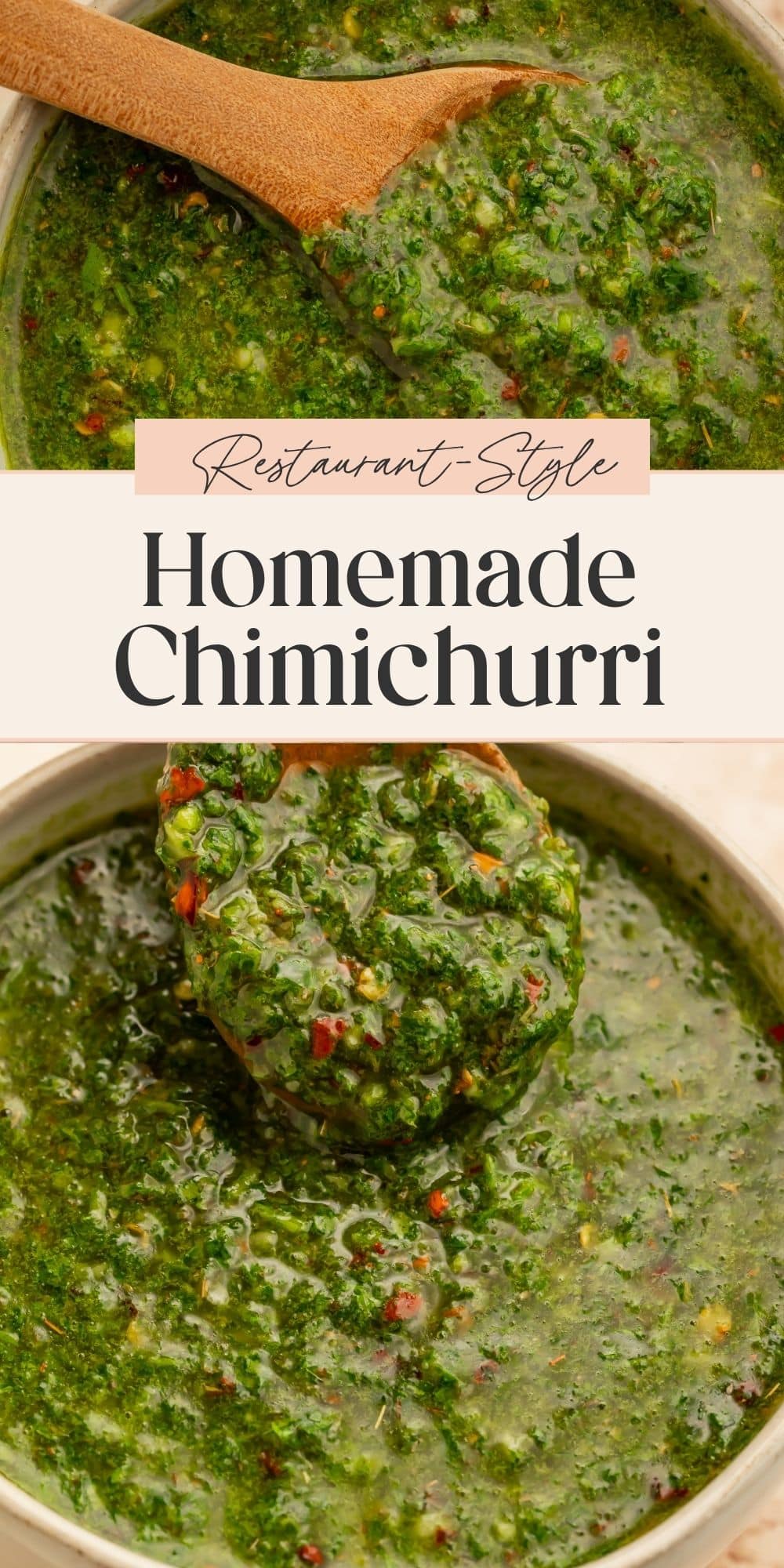
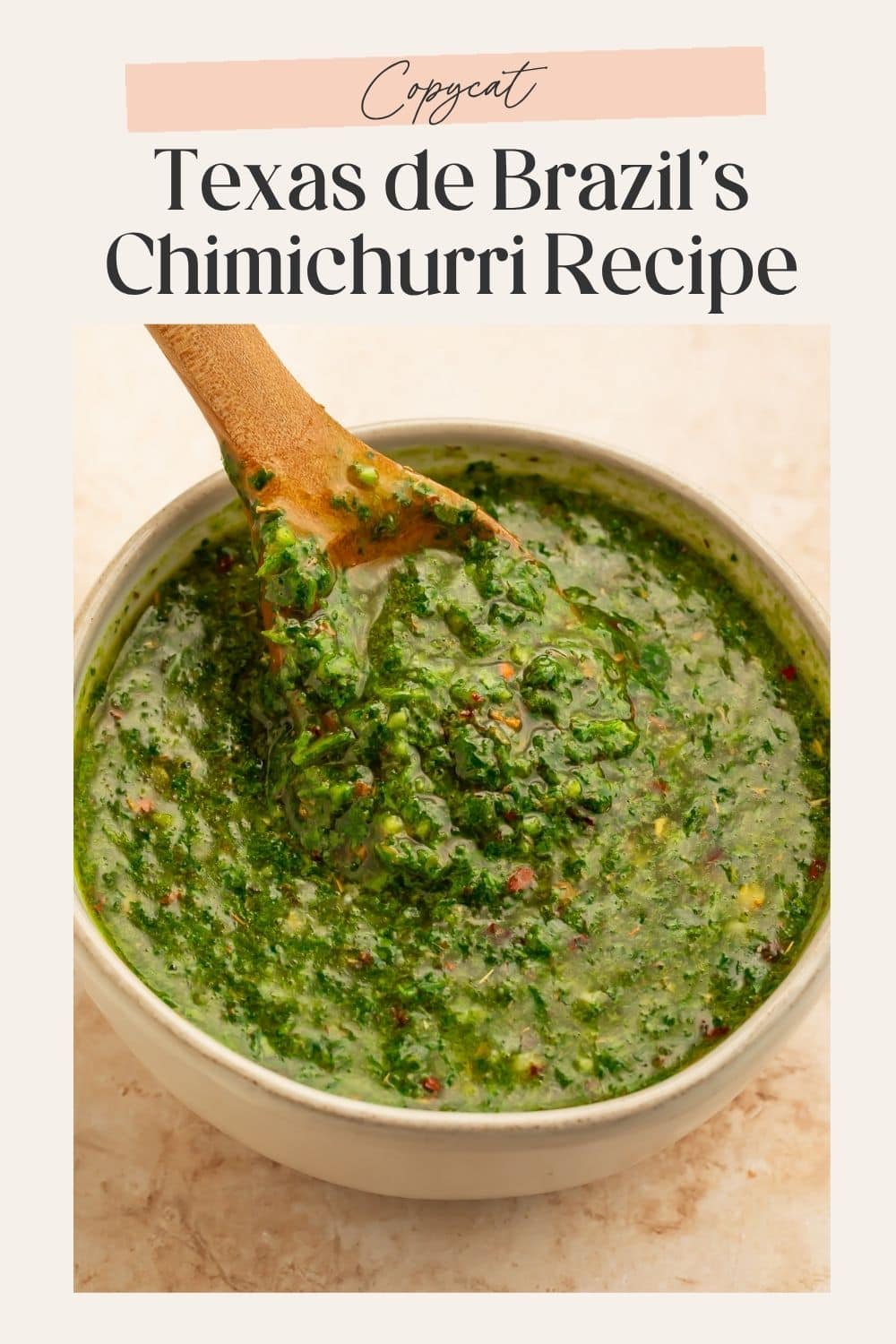
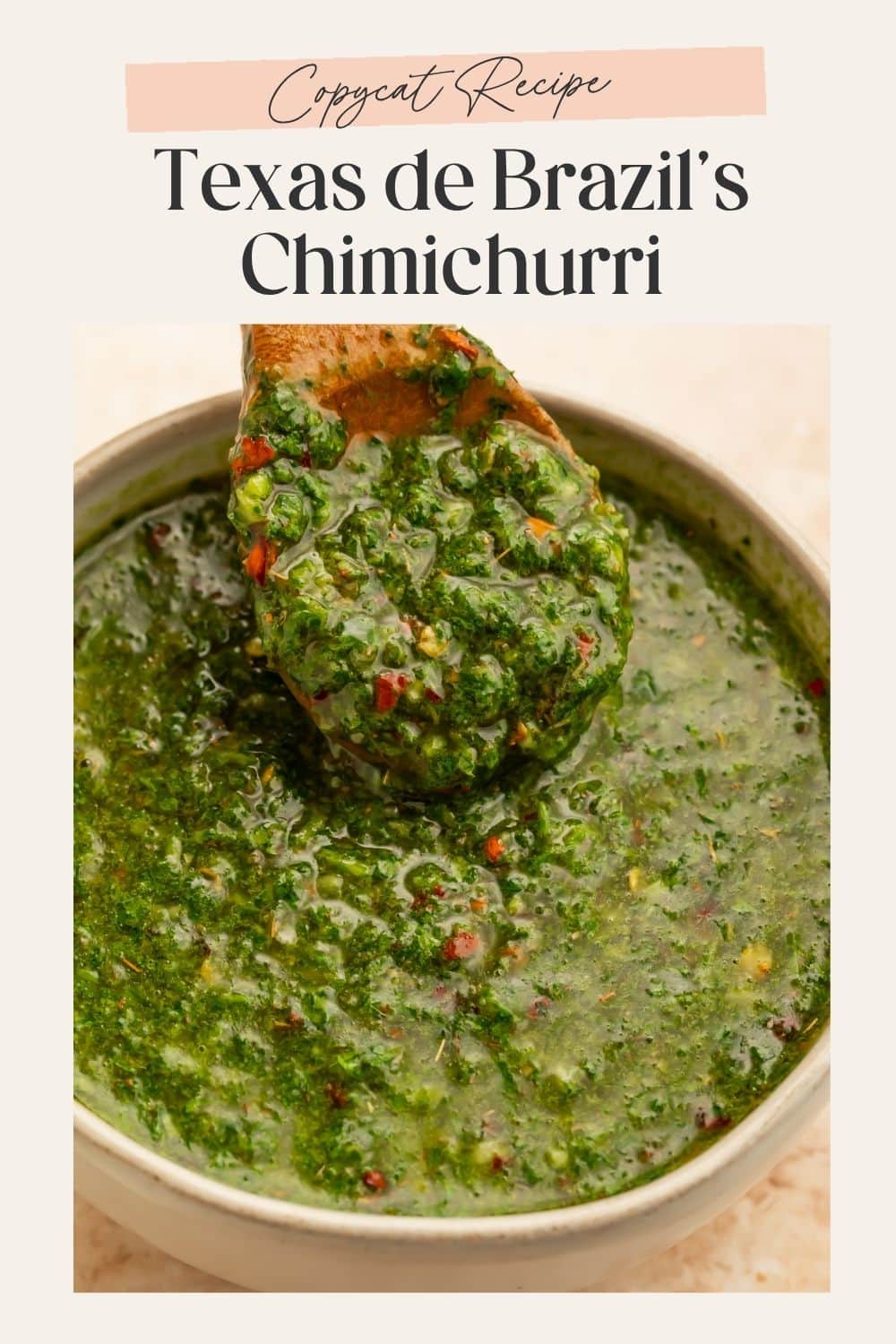
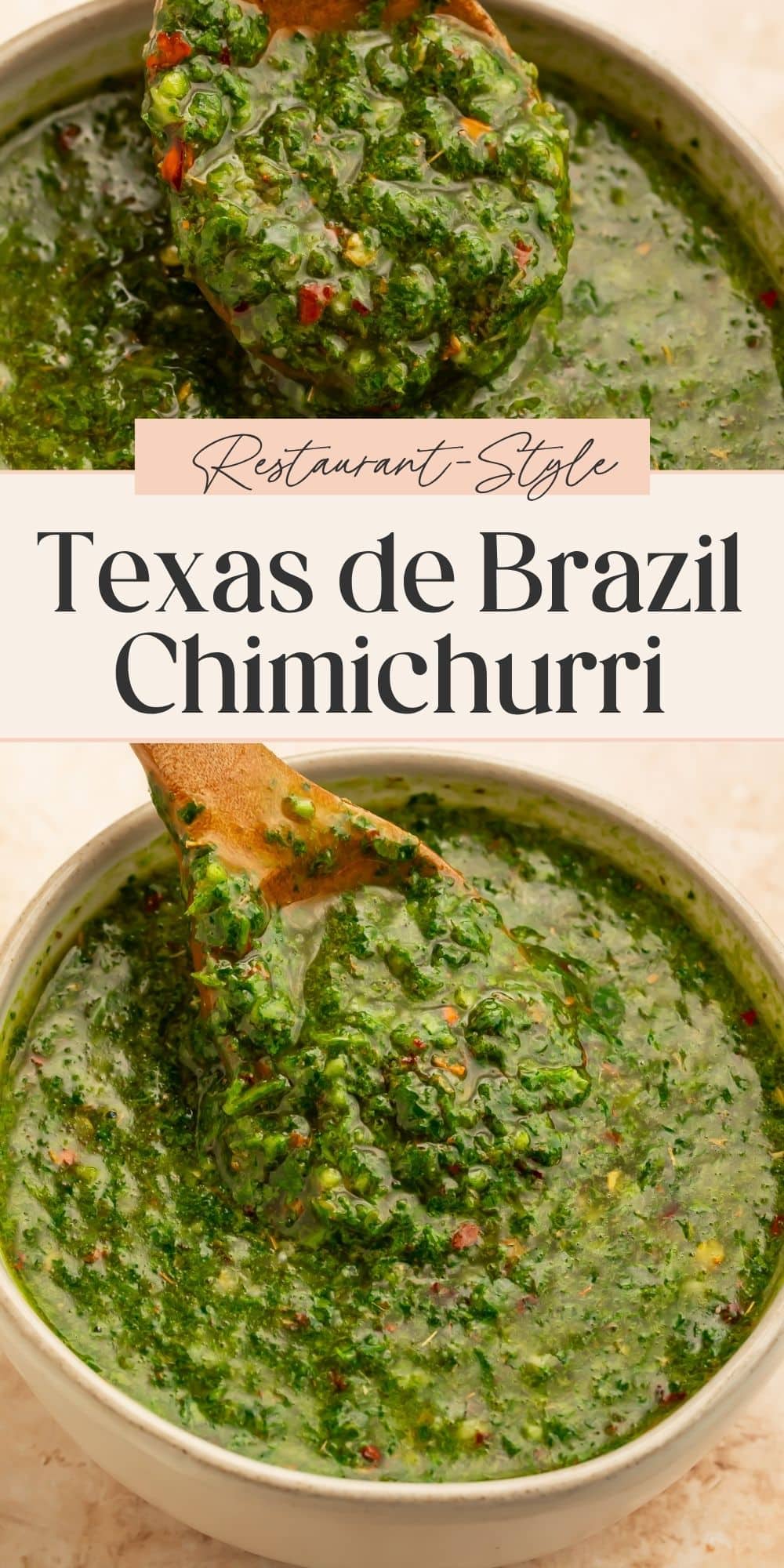
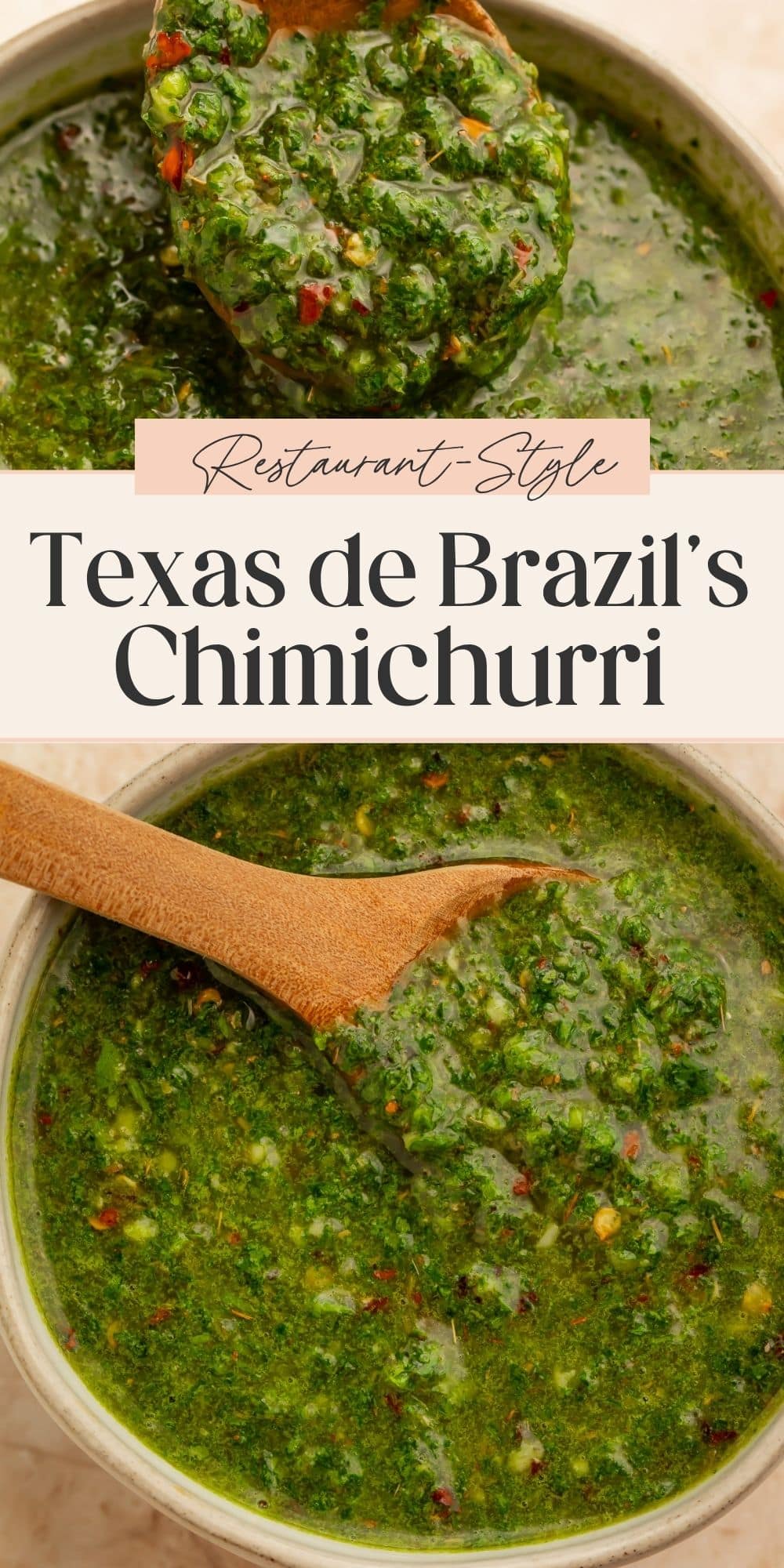
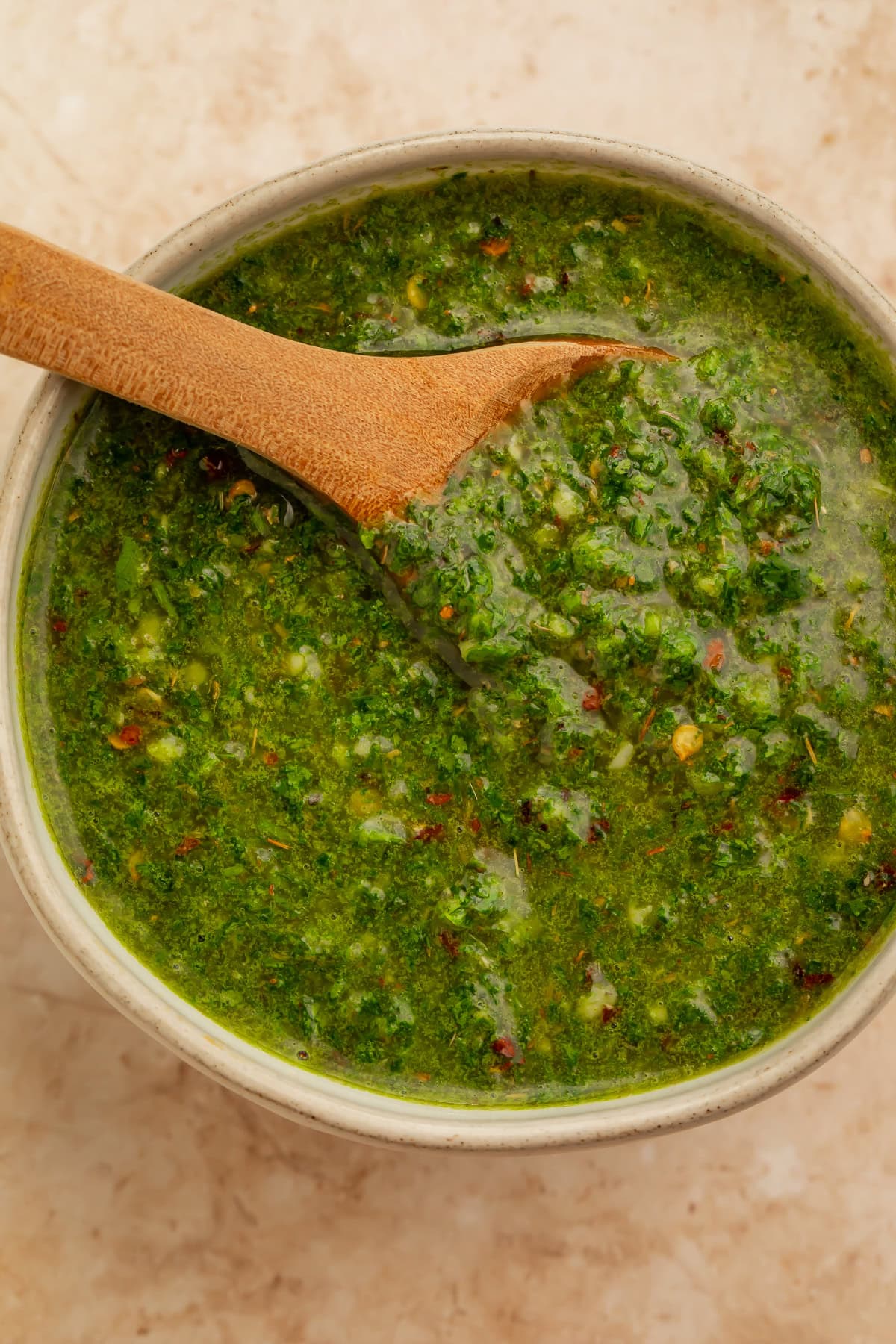
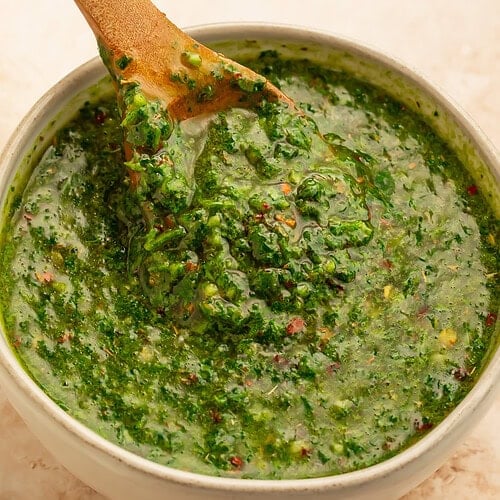
This vibrant, tangy chimichurri sauce is not only the easiest chimichurri recipe to make, but it’s also the best I’ve ever tasted! A perfect copycat for Texas de Brazil’s own chimichurri, it’s packed with fresh herbs, rich olive oil, bold garlic, and perfectly balanced spices. I have a jar of this chimichurri in my fridge at all times to use as a marinade or sauce for steaks, chicken, shrimp, fish, pork, or even roasted vegetables.
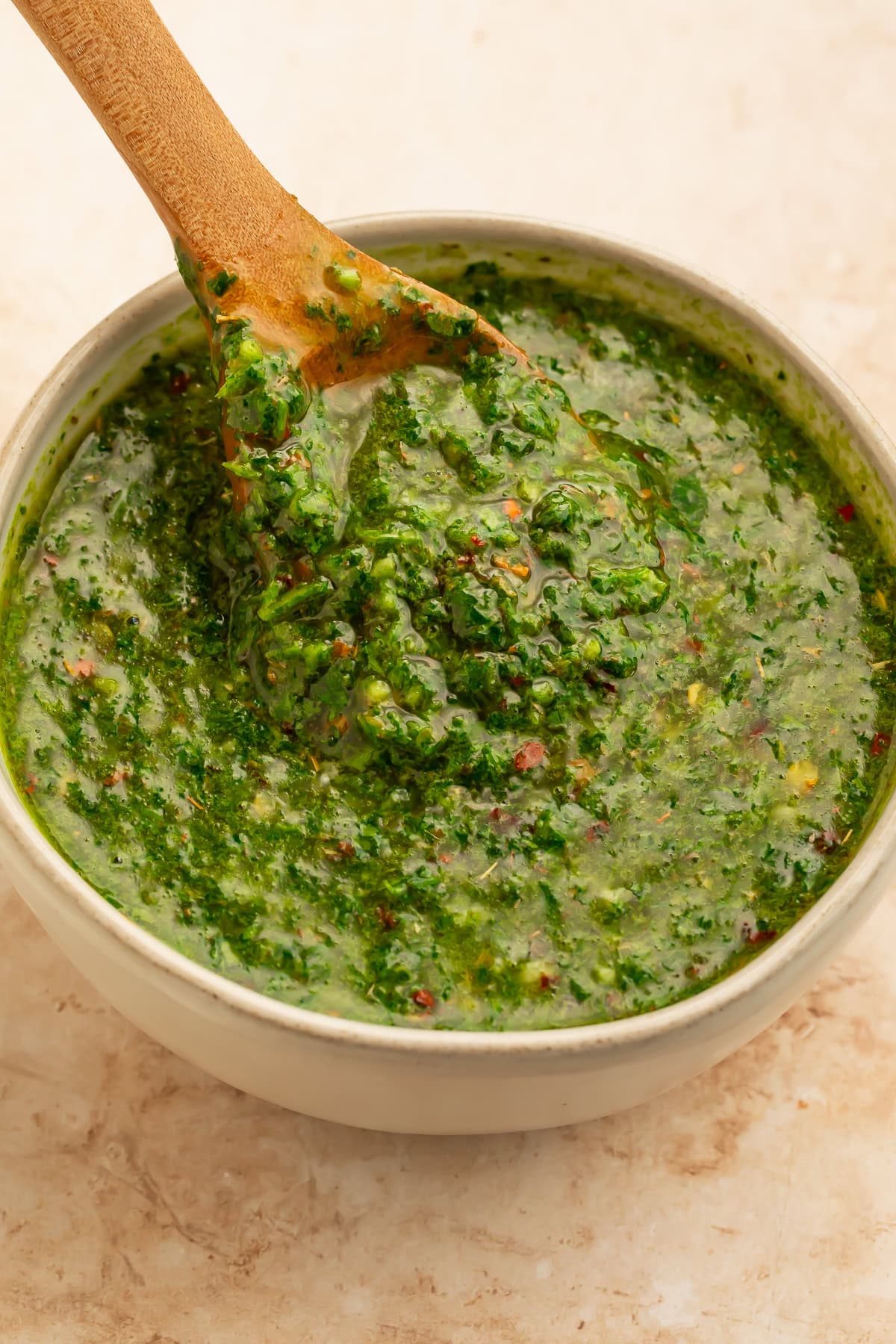
See recipe card below for full list of measurements, ingredients, and instructions.
What Is Chimichurri Sauce?
Chimichurri is a savory, herbaceous sauce that originated in Argentina and Uruguay, though today its popularity extends far beyond Latin America. There’s no cooking involved in making chimichurri, as it’s commonly used as a marinade or a condiment for various meats or sides.
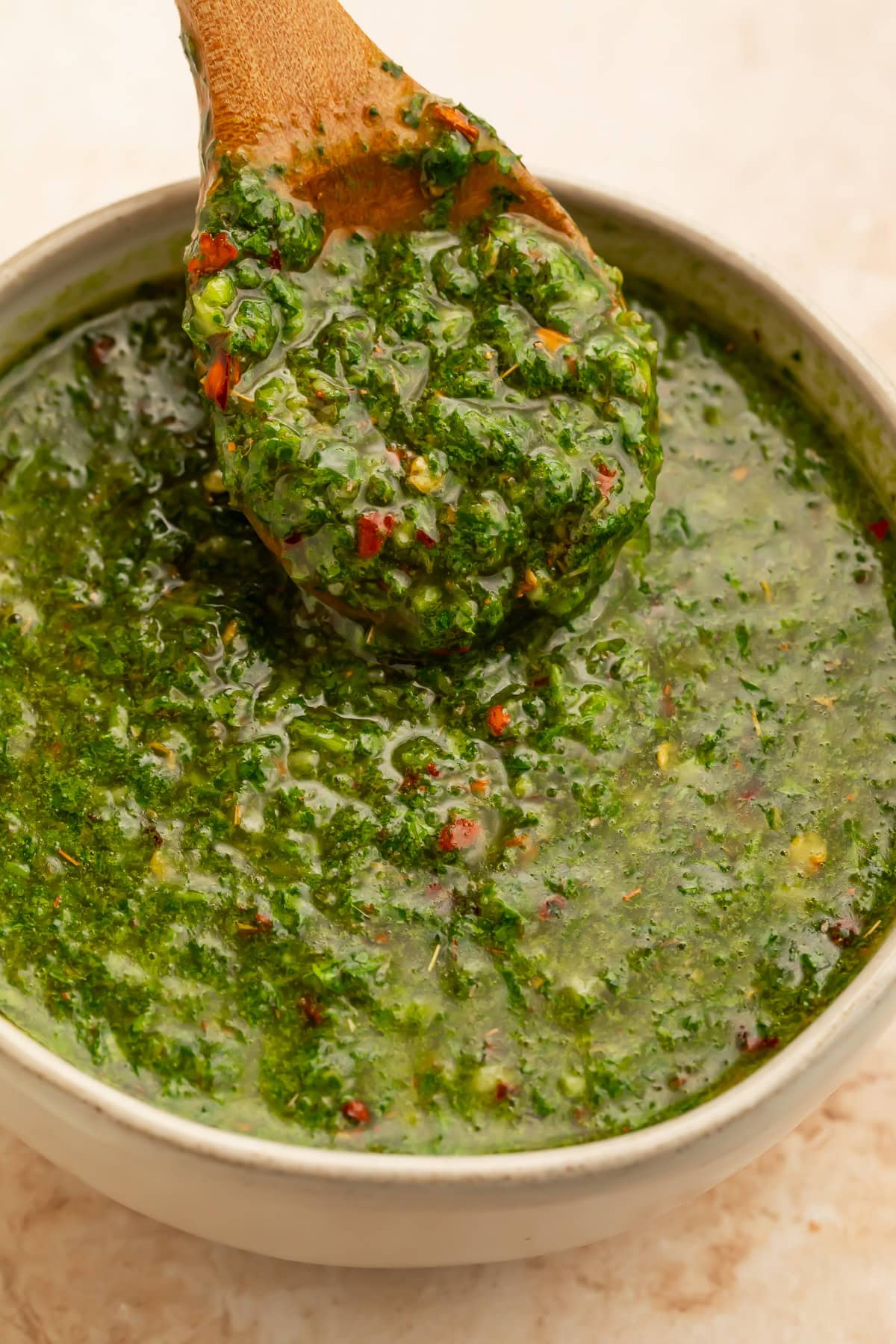
The ingredients list for classic green chimichurri is simple: garlic, olive oil, parsley, vinegar, oregano, red pepper flakes, and salt.
Why You’ll Want To Put This Sauce On Everything
- I’ve been making this perfect copycat Texas de Brazil chimichurri sauce for a solid decade now, and it’s such a staple in my meal plan that to this day it has its own spot in my fridge. I always have a batch on hand. The flavors are incredible – herby, slightly spicy, tangy, and pleasantly garlicky – and it’s so unbelievably versatile. I’ve used it on basically everything at this point: seared rib eye, chimichurri rice, garlic mashed potatoes, fried eggs, even as a dip for pizza! I’ve never once been disappointed.
- As the flavors develop overnight it is something I like to make ahead if I’m going to be grilling up steaks for guests. It really packs a punch, looks great served over a platter of sliced meat, but is super simple to mix together!
- Without any ingredient swaps this sauce is also great if you’re catering for special diets: it’s naturally paleo, Whole30 compliant, low carb, keto, gluten-free and vegan!

What I Learned Developing This Recipe
- This is a copycat of the chimichurri served at Texas de Brazil, which means I make it the same way they do! If you’re looking for a chimichurri that’s less oily, start with just ¼ cup of oil and add more in small increments until you’ve got your desired consistency.
- I like to add the ingredients to the food processor incrementally to be sure everything’s finely chopped and you don’t get any giant pieces of garlic or herb leaves in a bite.
- If you don’t have a food processor, you can actually make this whole chimichurri recipe by hand instead! It takes a little more effort and a little more time, but you still end up with a delicious chimichurri in the end. Use a sharp knife to mince the garlic, parsley, and cilantro really well. From there, add everything to a bowl and whisk vigorously until all the ingredients are fully incorporated. However, don’t try to use a mortar and pestle as you would making pesto, when I tried that it just turned the sauce to mush. Texture is important!
- When it comes to salt, I always recommend starting out low. I like my chimichurri salty, so I actually use a full tablespoon in my own batches. I’ve written the recipe with just ½ tablespoon, though, because you can always add more, but you can’t take it back out. It’s way better (and less frustrating) to under-salt it than to over-salt it.
- As there is always a jar of this sauce in my refrigerator I’ve played around with making the recipe a bit lighter: instead of 1 cup olive oil, use ⅓ cup water and ⅔ cup olive oil. For an even lighter chimichurri, use ½ cup water and ½ cup olive oil.
Ingredients
Fresh garlic – As this is what adds fragrance to the sauce, only fresh garlic works in this recipe!
Parsley – This provides the traditional herby base for the chimichurri. Flat leaf parsley chops better for sauces.
Cilantro – This is not part of the traditional recipe, but is in the Texas de Brazil recipe. I find it adds a lovely complexity, but you can always make a classic, all-parsley sauce instead.
High-quality olive oil – It’s super important that you use a high-quality, great-tasting olive oil (or EVOO) to make your chimichurri. Since the olive oil is so prominent, using a subpar oil can absolutely wreck the flavor of the sauce. Low-quality olive oils will taste oily and bitter, and some are even diluted with older batches of olive oil or other oils altogether. High-quality oils have a more subtle, herby, sometimes fruity taste and aroma. Your oil needs to be fresh, too. Even high-quality olive oil will taste rancid after it expires.
Fresh lemon juice – Traditional chimichurri uses red wine vinegar instead, but I LOVE the freshness lemon adds to the Texas de Brazil version – I think it works really well with the rest of the sauce flavors. However, you can use red wine vinegar instead, or a mix of both.
Dried oregano – Using dried herbs too adds a lovely aromatic depth to the sauce. Don’t worry about dry bits in the sauce as it will re-hydrate when it comes into contact with the lemon juice.
Crushed red pepper – This adds a lovely hit of warmth and spice to the sauce. Reduce the amount of crushed red pepper flakes or omit them entirely to make it milder.
Serving & Storage Suggestions
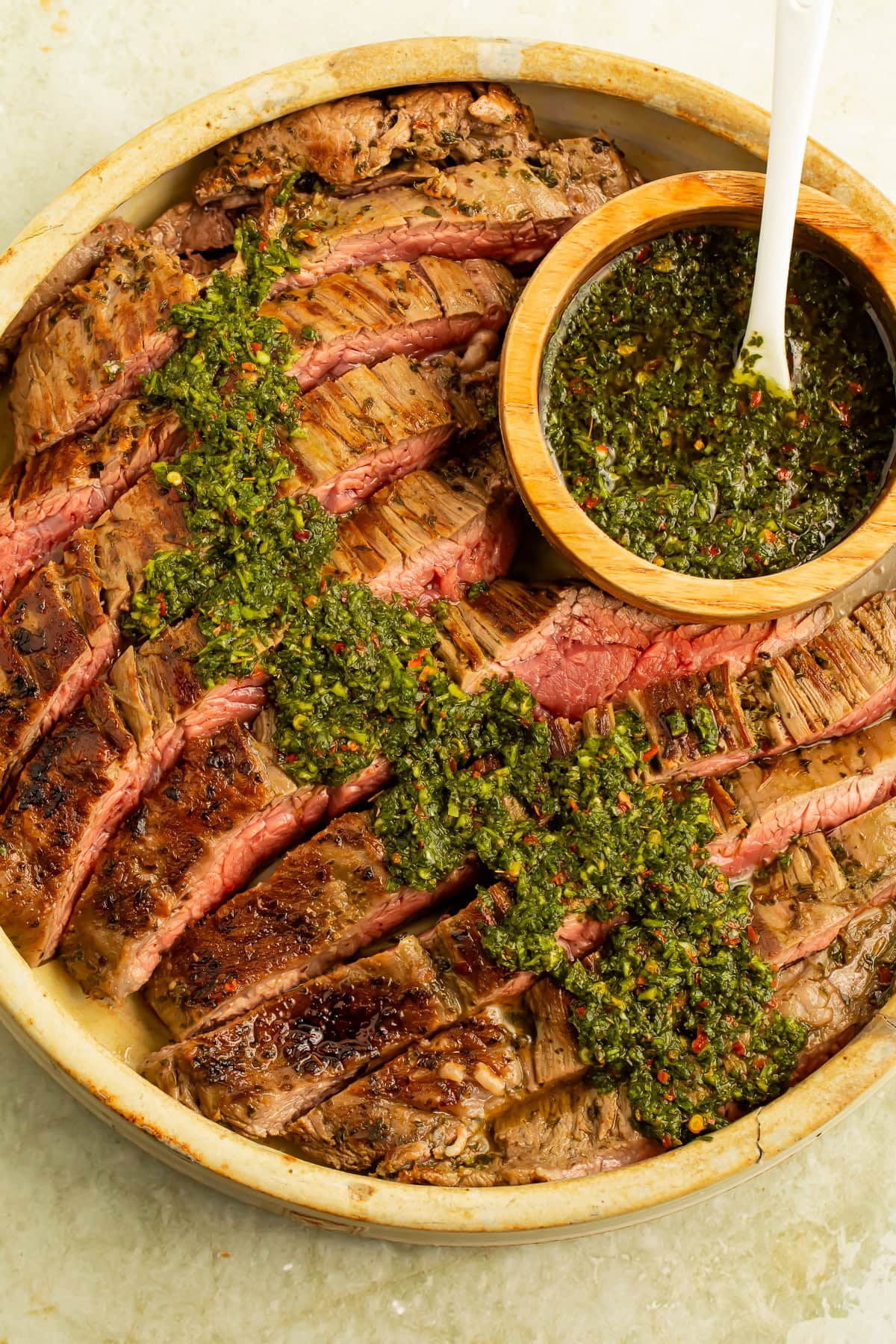
Chimichurri is perfect as a marinade or topping for grilled or roasted meats like steak, chicken, shrimp, scallops, pork chops, fish, etc. You can also drizzle chimichurri over roasted vegetables, baked or mashed potatoes, fried eggs, cooked rice, salads, and pasta.
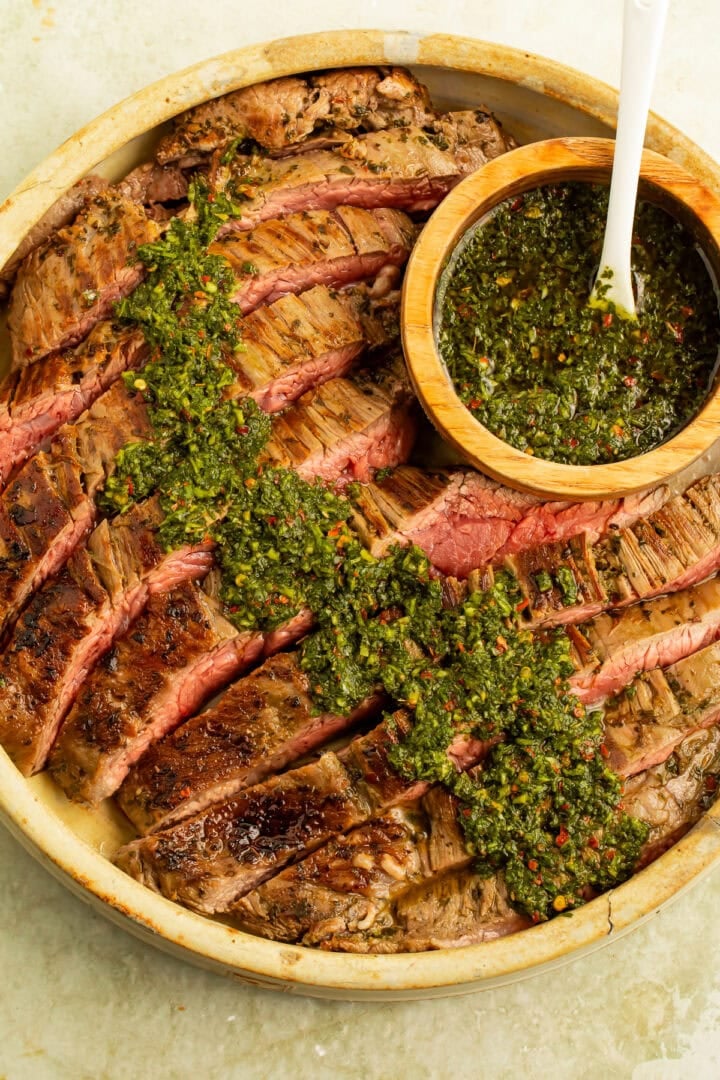
Try my Chimichurri Flank Steak recipe, where I’ve used the chimichurri as both a marinade (for super tender, flavorful-steak) and as a sauce to serve!
Leftover chimichurri sauce will keep well in a clean jar in the refrigerator for up to two weeks. If any separation occurs, shake container or whisk sauce vigorously until ingredients are reincorporated. You can also freeze portions in an ice cube tray for up to 3 months!
Frequently Asked Questions
Yes as it does provide depth and that authentic flavor, but I know a whole 2 tablespoons might be a bit much if you’re not a fan of raw garlic taste, so you can always scale it back a bit.
Yes! Instead of 1 cup olive oil, use only ½ cup olive oil and add the flesh of one large avocado.
If your parsley was picked too late in the season, it can have a bitter flavor, which would affect the taste of the chimichurri. Older olive oil and low-quality olive oil can also make the sauce bitter, as can using too much garlic. There is nothing you can do about old olive oil, but if your parsley is the problem you can balance the sauce with a pinch of sugar. You can balance out the garlic by doubling the recipe, omitting the garlic from the second batch and gradually mixing them together to taste.
Making changes to a recipe can result in recipe failure. Any substitutions or variations listed are simple changes that I believe will work in this recipe, but results are not guaranteed.
Best Ever Chimichurri Recipe (from Texas de Brazil)

Equipment
- Food processor see Notes
- Silicone spatula
- Airtight container
Ingredients
- 2 tablespoons roughly chopped fresh garlic approximately 6 cloves, more or less to taste
- ½ cup fresh parsley leaves
- ¼ cup fresh cilantro leaves
- 1 cup high-quality olive oil or avocado oil
- ¼ cup fresh lemon juice 4 tablespoons, from approximately 2 large lemons
- 1 tablespoon dried oregano
- 1 tablespoon crushed red pepper more or less to taste
- ½ tablespoon table salt plus more to taste

Instructions
- Add 2 tablespoons roughly chopped fresh garlic to bowl of food processor. Pulse garlic until minced.
- Add ½ cup fresh parsley leaves and ¼ cup fresh cilantro leaves to food processor with minced garlic. Pulse until leaves are uniformly chopped. Scrape down sides of food processor bowl with silicone spatula as needed.
- Add 1 cup high-quality olive oil, ¼ cup fresh lemon juice, 1 tablespoon dried oregano, 1 tablespoon crushed red pepper (to taste), and ½ tablespoon table salt (to taste) to food processor. Pulse until ingredients are well combined, being careful not to over-process mixture into paste. Scrape down sides of food processor bowl with silicone spatula as needed.
- Taste chimichurri and add garlic, crushed red pepper, and salt as needed. Add ingredients in small increments and pulse 1 to 2 times to incorporate. Taste again and continue adjusting if needed.
- When satisfied with flavor, use prepared chimichurri to marinate meat of choice, or transfer sauce to airtight container and refrigerate until ready to use.
Video
Approximate Information for One Serving
Nutrition Disclaimers
Number of total servings shown is approximate. Actual number of servings will depend on your preferred portion sizes.
Nutritional values shown are general guidelines and reflect information for 1 serving using the ingredients listed, not including any optional ingredients. Actual macros may vary slightly depending on specific brands and types of ingredients used.
To determine the weight of one serving, prepare the recipe as instructed. Weigh the finished recipe, then divide the weight of the finished recipe (not including the weight of the container the food is in) by the desired number of servings. Result will be the weight of one serving.
Did You Make This Recipe?
Tag @40aprons on Instagram and be sure to leave a review on the blog post!
More Easy Sauce Recipes
Never Miss A Meal!
New Recipes Straight To Your Inbox
A curated selection of our most recent recipes, delivered straight to your inbox once a week.















Think I’ve commented before but all my neighbors are wanting more and asking if they’ll have a jar at Xmas! I’ve made this for years as well using your base and I use the exact amount of oil and the tablespoon of salt! What can change the viscosity is how much you press down your herbs measuring, what kind of oil and whether you let it sit over night. A good olive oil and sitting over night makes it pretty thick(for a minute). The big changes I make are playing with different oils from avocado to olive, also Italian parsley can make a difference and finally I swap out pequin chili flakes or smoked (forget the name) Anyhow. Your recipe is perfect to me. (And everyone who’s tried it!) Even if I experiment and don’t love it(all avocado oil…) it’s still great! So cheers. My tri tip is on hour 17 and can’t wait for the chimi!
Thank you so much for the helpful review, Scott! We hope your tri tip turned out well! 😊
After just now reading many reviews, you might want to change the amount of oil & salt. I’m going to make this tonight, but with half the oil & salt. I trust the reviewers 🙂
Hi Kathy! Our recipe as written is an exact copycat from Texas de Brazil. You can totally make any adjustments as needed! 😊
Way too much oil.
We’re so sorry it wasn’t a hit!
We’ve been making this recipe for many years. Its the best we’ve found. This recipe has been slightly changed from the old one we have in our recipe book. It calls for 1/2 TBSP salt. For us this is great. This is how we made it anyway. Originally it was written with 1 full TBSP. Yikes. it was way too salty for us. Another thing we also do is cut the red pepper flakes in half. it still makes it spicy but allows nearly everyone in the family to eat it.
I pack my measuring cups tight with herbs and garlic. This recipe is a hit every time for us. Has great wow factor on everything from kebabs to baked potatoes. Awesome job! Thank you for an amazing recipe.
We’re so glad it’s a family favorite! Thanks for sharing, Joe!
Love it!
We’re so glad you enjoyed it, Lynette!
I made this recipe tonight to go with carne asada dinner. One cup of olive oil is far too much! It would have been fine with 1/4 cup or less; had to strain it just to tolerate it. Was this intended to be a marinade rather than sauce topped upon cooked meat?
We’re so sorry it wasn’t what you expected! We make it just like Texas de Brazil does, but you can totally adjust the amount of oil to your liking! While it’s not intended to be a marinade, it does make a delicious one if you ever wanted to try that! 😊